Best Software for Wedding Coordinators: What to Test
The best software for wedding coordinators has to re-time a whole day when one moment moves. Six criteria to judge any tool on, and how to test each one.
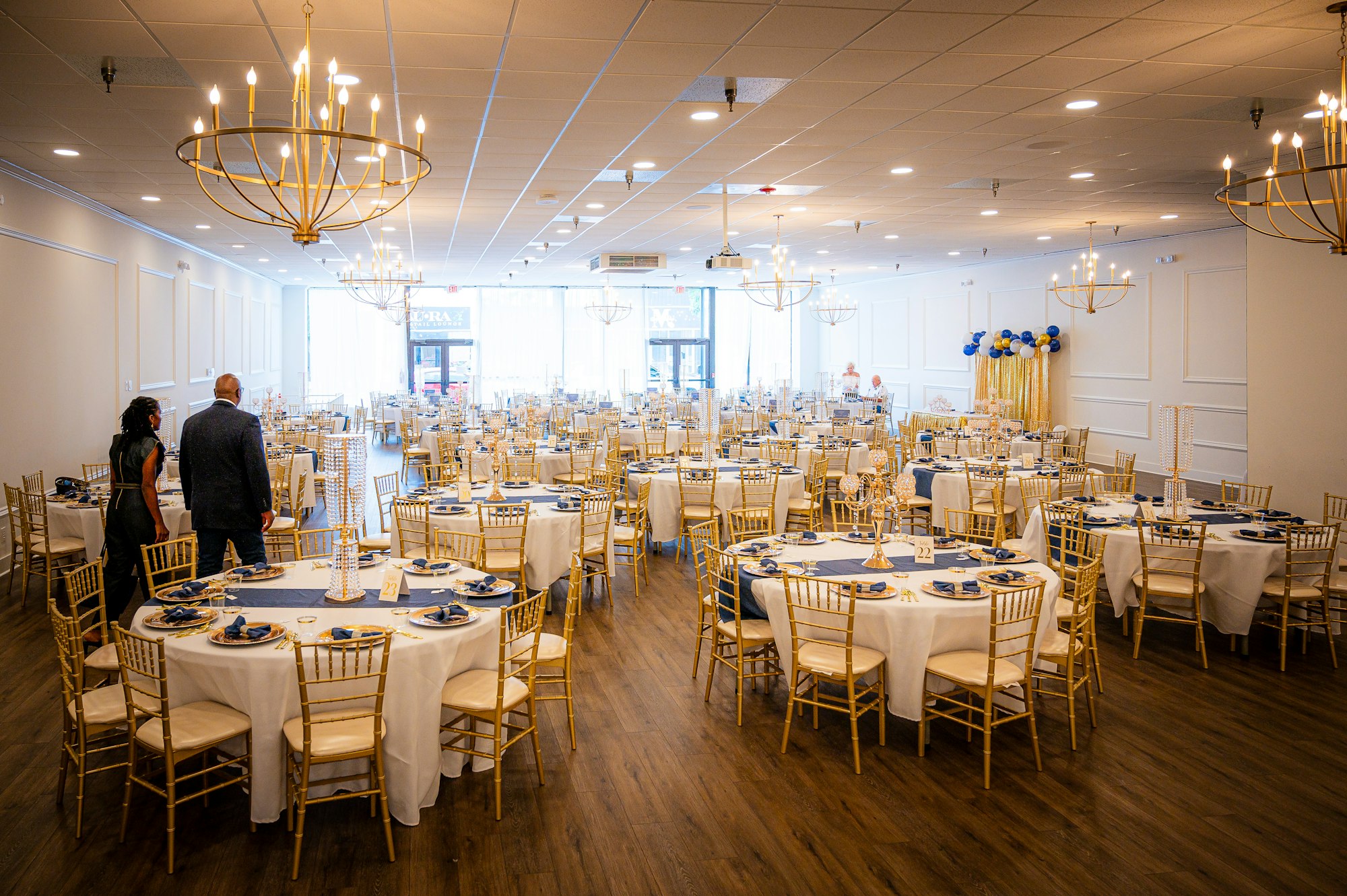
The best software for wedding coordinators has to do one thing well: re-time a whole wedding day when a single moment moves. Use a run sheet tool if what you sell is the day itself. Use a client-management tool if what you sell is enquiries, contracts and invoices. Most coordinators end up paying for one of each, and everything below is about choosing the first kind.
There is no ranking on this page. Products change their plans and their feature lists every season, while the list of things a coordinator's software has to survive stays where it is. So here are six criteria instead, each one with a way to test it in ten minutes on a trial account, and one check that runs through all of them: move the ceremony twenty minutes later and watch what the tool does with the rest of the day. Call it the twenty-minute test.
What does wedding coordinator software actually have to do?
Two different jobs get sold under one phrase, and they want different tools.
The first job is the business. Enquiries, quotes, contracts, invoices, payment reminders, a place to keep the couple's answers. The second job is the day: a minute-by-minute run sheet, a supplier list with real phone numbers, a seating plan, and something you can read on a phone at 4:55 PM when the celebrant is stuck in traffic and eight other people are waiting on a decision.
Tools built for the first job rarely carry the second one well, because a contract does not have a clock in it. The count of people waiting on that clock is the reason it matters. The Knot Worldwide's 2026 Real Weddings Study, built from self-reported answers by 10,474 US couples married in 2025, records an average of 13 hired professionals per wedding.2 That is a US figure and no Australian count per wedding is published anywhere citable, so treat it as an order of magnitude rather than a local number. It still sets the size of the problem: one change on the day has to reach a double-figure group of people who are each busy doing something else.
The six criteria to judge any tool on
Take a trial account and work down this list. Each row has a test you can run without a real client in the system.
| Criterion | The test | Passing looks like |
|---|---|---|
| Re-timing | Move the ceremony twenty minutes later | Every row after it moves with it, in one action |
| Supplier views | Share the day with one supplier | They open a link and read only their own rows |
| Day-of access | Print it, then change something | A printable sheet and a live link off one document |
| Buffers | Add thirty minutes after the ceremony | The pad holds and the rows behind it shift cleanly |
| More than one wedding | Open two Saturdays in the same month | Both sit in one account, with seats for your team |
| The room | Take twenty-three guests off the list | The tables rebuild without retyping the plan |
Criterion 1: does one change re-time the whole day?
This is the criterion that separates a document from a tool, and it is the one to test first because failing it makes the other five irrelevant.
A wedding day is a chain of dependencies wearing the costume of a list. Getting ready sits four hours before the ceremony. The cars leave forty-five minutes before it. Guests arrive half an hour before it. Family photos land half an hour after, the reception three hours after, and the send-off five hours after the reception. Change the ceremony time and every one of those numbers is wrong at once.
In a spreadsheet you retype them. In a tool that derives the day, you type the new ceremony time and read the sheet back. With no finish time set, the PlannedBy generator ends the night five hours after the reception starts, places dinner forty-five minutes into the reception, speeches at ninety minutes and the first dance at two and a half hours, and drops any beat that would land after the send-off. The send-off itself is never dropped, because the venue is the one party that will not negotiate.
A 3:00 PM ceremony moved to 3:20 PM, and the derived rows that move with it.
How to test it: set a ceremony time, let the tool build a day, then change that one field. If you have to touch a second row by hand, you are still doing the arithmetic and the software is storing it.
Criterion 2: can every supplier see only their own rows?
A full run sheet is unreadable to the people it is written for. The florist does not need the speech order and the DJ does not need the buttonhole count, and handing both of them the whole document is how a row gets missed.
The shipped afternoon run sheet is built as nine columns: a primary sheet everyone reads, plus one each for the photographer, videographer, hair and makeup, celebrant, florist, caterer, DJ or band, and transport. A row survives into a supplier's view only when that supplier's column has something in it. Counted across the afternoon scenario, the primary sheet carries 32 rows with content, the photographer 23, the DJ or band 21, the videographer 19, the caterer 16, the celebrant 14, the florist and transport 12 each, and hair and makeup 11.
Rows with content per column in the shipped afternoon run sheet.
Jordan, founder and lead wedding coordinator at Managing Matrimony, lists the distribution for an Australian wedding as every paid supplier - photographer, videographer, florist, DJ, celebrant, coordinator, caterer, bar - plus the MC, the wedding party, parents, and one trusted family member as a backup contact.1 That is the audience your document is actually written for, and almost none of them want all of it.
How to test it: build a day, then look at it as one supplier. If the only sharing option is the whole sheet, you will be sending eight versions of the same file by email on the Thursday before.
Try the twenty-minute test on a real day Put a ceremony time into the run sheet generator, read the day it builds, then change the time and read it again. Nothing to install, and the supplier columns come with it.
Criterion 3: does it survive the day on paper and on a phone?
A coordinator's copy has to work in two states at once. Printed, because venues have back corridors with no signal and because a caterer will pin it to a wall. Live, because the version pinned to the wall was right at 9 AM and is wrong by 2 PM.
Managing Matrimony ships its Australian run sheet as both, a PDF for printing and a live link for last-minute edits.1 That is the shape to insist on. A tool that only prints leaves you correcting paper by hand; a tool that only lives on a screen fails the first time a venue's wifi does.
The document also has to outlast the people using it. Australian wedding photographers put standard on-the-day coverage at around eight hours, sometimes stretching to ten, with short-form coverage of the ceremony and portraits running three to four hours.3 Your suppliers arrive and leave in overlapping blocks while you hold the whole span, so the sheet has to make sense to somebody who walks in at hour six and reads three rows.
On-the-day photography coverage as Australian photographers describe it.
How to test it: print the sheet, then change a time and print it again. If the second copy is not obviously different at a glance, your suppliers will keep working from the first one.
Criterion 4: do your buffers hold?
Padding is the craft part of the job, and it is the first thing a rigid tool destroys.
Managing Matrimony pads three moments by default: thirty minutes after the ceremony for photos and travel, fifteen minutes for the reception entry because guests move slower than the plan assumes, and ten minutes between speakers.1 Those three numbers are the difference between a run sheet and a wish.
Padding minutes an Australian coordinator adds by default.
Speeches are where the padding is most often missing. Bridebook's Australian edition recommends keeping the whole speech segment to no more than forty minutes and says it usually wraps up within twenty to thirty.4 That is a recommendation rather than a measurement, and it is worth pricing as a block in your sheet rather than as a list of individual speakers, because the block is what the kitchen is waiting on.
How to test it: add thirty minutes of padding in the middle of a built day. A tool that passes shifts everything behind the pad and leaves everything in front of it alone. A tool that fails either ignores the pad or drags the ceremony backwards to make room.
Criterion 5: can it hold more than one wedding at once?
Coordinators do not get their weddings spread evenly through the year, and no software fixes a calendar. It can stop you keeping five of them in five separate files.
Australian marriage dates cluster hard. The Australian Bureau of Statistics records 25 October 2025 as the most popular date to marry that year, with 2,035 marriages, and of the fifty most popular dates, forty-five fell on a Saturday.5 Your busy season is the same busy season as every venue, celebrant and photographer you work with.
The fifty most popular Australian marriage dates of 2025, by day of the week.
What that means for the purchase: one account that holds every wedding you are running, with seats for the people helping you run them, beats a folder of documents named after couples. The PlannedBy planner plans are built for exactly that, and they are charged monthly, while a couple buying the same document for their own wedding pays once rather than subscribing. Prices sit on the pricing page because they are charged in local currency and a number printed here would be wrong for most readers.
The other half of this criterion is scenario range. Not every wedding is an afternoon ceremony with an evening sit-down. A morning wedding runs 52 rows from 5:45 AM to 4:00 PM, and a wedding split across two venues runs 62 rows from 6:45 AM to 11:00 PM, including a five-hour break in the middle of the day that has 18 rows of its own. If a tool only knows one shape of day, you will be fighting it on every second booking.
A morning wedding against a wedding split across two venues.
Criterion 6: does the room plan move when the guest list does?
Seating is the other document that gets rebuilt under pressure, and it is usually rebuilt late.
Easy Weddings' 2026 industry report puts the average Australian guest expectation at 108 and the average number who actually come at 85, a gap of 23 fewer guests than originally planned.6 At eight to a round table, which is the rule of thumb Easy Weddings suggests for a standard round, that gap is roughly three tables.7 A 1.8 metre round, the standard size, is listed by Australian hire companies as seating eight to ten.8
What Australian couples plan for against what they end up seating.
So the seating plan you build in month four is not the plan you print in month eleven, and the tool has to make removing three tables an afternoon's work rather than an evening's. The PlannedBy seat planner is one of the free tools and needs no account to try, which makes it the fastest of these six criteria to test.
How to test it: build a plan, delete a table's worth of guests, and see how much of it you have to redraw.
How PlannedBy scores against the six
Criteria one, two, three and six are what the product is built around: the day derives from anchors, suppliers get their own columns, the sheet prints and lives at the same time, and the seating plan is a tool rather than a diagram. Criterion five is the planner plans, which hold multiple weddings and seats for a team.
Criterion four is a partial pass and worth saying plainly: padding works by placing real times, so you add a buffer by moving an anchor rather than by naming it a buffer. If you want a tool that tracks contingency as its own object, that is not what this is.
Nor does PlannedBy do the business job at all. There are no contracts, no invoices, no lead capture and no payment reminders in it. If that is the software you are shopping for, you are shopping for the other category, and most coordinators who use a run sheet tool are paying for a client-management tool alongside it.
Common questions
Do wedding coordinators need software, or is a spreadsheet enough? A spreadsheet is enough right up until the ceremony moves. It can hold a schedule perfectly well and cannot rebuild one, so the test is not how good your spreadsheet looks in week one but how long it takes to re-time on the Wednesday before the wedding.
What is the difference between a wedding CRM and run sheet software? A CRM covers the sale and the admin: enquiries, contracts, invoices, reminders. Run sheet software covers the day: derived times, supplier views, seating, the printable copy. Most coordinators run one of each, and the ones who try to do the day inside a CRM end up back in a spreadsheet.
How much should software for wedding coordinators cost? Judge it against the shape of your work rather than the number. If you run weddings all year, a monthly charge matches how you earn. If you are helping with one wedding, paying once for that wedding matches better, which is why PlannedBy charges couples once and coordinators monthly.
Can I use the same tool my couples use? Yes, and it removes a translation step. The run sheet a couple builds and the run sheet a coordinator runs are the same document, so taking over a day that has already been built beats rebuilding it from an emailed list.
What should I ask for in a demo? Ask them to move the ceremony. Everything else on a demo is a screenshot; that one action shows you whether the tool understands that a wedding day is a chain rather than a list.
Does any of this work on a phone on the day? It has to, and it is worth checking on your own phone rather than in a browser window on a laptop. Read a supplier's view of the day at the size you will actually be reading it, standing up, with one hand.
Where do I start if I am switching mid-season? Move one wedding, not all of them. Rebuild your next day in the new tool, run the same day-of process you already use alongside it, and compare the two on the morning of.
Who this is not for
If your bottleneck is getting enquiries and turning them into signed contracts, none of the six criteria above will help you, and a run sheet tool is the wrong purchase this quarter. Same if you coordinate one or two weddings a year as a favour - the document matters, the multi-client machinery does not, and you can build the day in the free tools without any of this.
The criteria are for the coordinator with several Saturdays booked in the same month, a group of suppliers to brief for each one, and a run sheet that has already been rewritten twice. If that is you, run the twenty-minute test on whatever you are using now before you look at anything new. A tool that fails it is costing you an evening per wedding, and you can start with a supplier-ready sheet to see what passing looks like.
Sources
- The Ultimate Wedding Day Runsheet Template for Australian Couples
- 2026 Real Weddings Study
- How long do I actually need a photographer for? | Expert Wedding Advice
- How Long Should a Wedding Speech Be?
- Marriages and Divorces, Australia
- The Annual Australian Wedding Industry Report 2026 (Issue Eleven)
- What you should know about your wedding seating plan
- Round Timber Banquet Table Hire