Wedding Day Timeline Mistakes That Push the Day Late
The three most common wedding day timeline mistakes all trace to missing buffer time. Here is how to fix each one before the day begins.
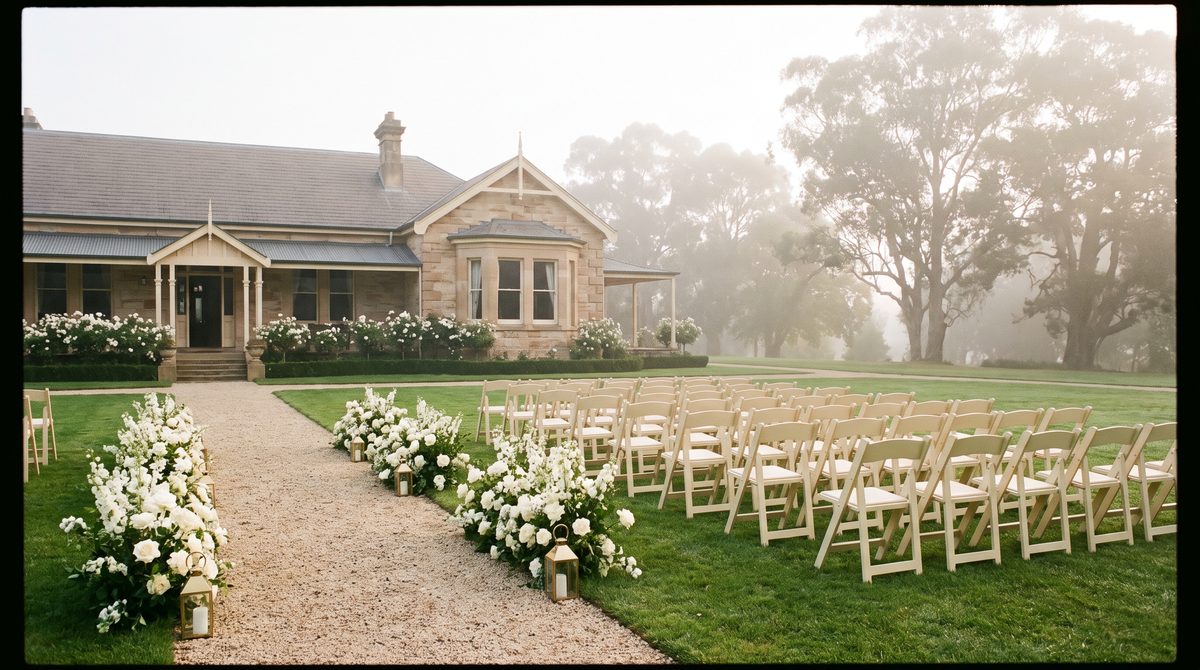
Most couples assume a wedding day timeline runs late because of unexpected mistakes - a delayed supplier, a reading that goes long, a slow crowd. The three specific wedding day timeline mistakes that actually push the day behind are predictable, and all of them trace to the same cause: buffer time that was never written in.1
The morning window: back-calculate from ceremony, not forward from alarm
The most common mistake in building a wedding day timeline starts before the day does. Couples open a spreadsheet, write "hair starts at 8:00 AM" and fill forward from there, hoping the rows land somewhere near the ceremony start. The problem is that the getting-ready window is not an independent variable - it is derived from the ceremony time. Starting from morning and guessing forward means guessing twice.
The correct direction is backward from ceremony. Start with the ceremony time and work outward in both directions.
Here is a worked example for a 4:00 PM ceremony.
| Time | Event | Notes |
|---|---|---|
| 7:00 AM | Hair and makeup starts | 4 hours before photographer arrives |
| 11:00 AM | Photographer arrives | 4-5 hours of coverage to ceremony |
| 3:15 PM | Leave for venue | 45 minutes before ceremony |
| 4:00 PM | Ceremony | Anchor time |
| 4:25 PM | Ceremony ends | 25-minute civil ceremony2 |
| 4:55 PM | Cocktails start | 30-minute transition buffer1 |
| 6:05 PM | Guests seated | 60-minute cocktail hour5 plus 10-minute seating window1 |
| 6:30 PM | Speeches start | 25 minutes after seating to open the room |
| 7:10 PM | Dinner service | 40-minute speech ceiling4 |
Every line after 4:00 PM derives from the ceremony anchor. Every line before it derives backward from 11:00 AM. The morning alarm is the last thing you write, not the first.
The ceremony-to-reception gap
A civil wedding ceremony in Australia runs 20 to 30 minutes.2 If the run sheet places cocktail hour at the same time the ceremony ends, no space exists between them for the family photo at the altar, the walk to the reception space, or the 85-person crowd finding a drink.
"The biggest mistake couples make is under-padding transitions." The buffer to add between ceremony end and cocktail hour start is 30 minutes: time for a family group shot at the ceremony location, transit to the next space, and the natural spread of a crowd that has just been seated for half an hour.1
In the worked example above, this is the gap between 4:25 PM (ceremony end) and 4:55 PM (cocktail hour start). Those 30 minutes do not feel significant on paper. On the day, they are what allows the reception to start on time. More detail on the gap is at /how-long-is-cocktail-hour-at-a-wedding.
The speech block ceiling
The guidance for Australian wedding speeches is 3 to 5 minutes per person.3 The full speech block - welcome, parent speeches, wedding party, the couple - should close within 30 to 40 minutes in total.4
A run sheet that writes "speeches" with no start time, no end time and no individual durations gives the MC no tool to hold the clock. Each speaker estimates their own length. Three speakers who each run 8 minutes when they said 5 add 9 minutes of unscheduled time before the first dinner plate arrives.
The fix is one column added to the run sheet: a duration next to each speaker name. "7:00 PM - Parent speeches, 5 minutes each. 7:10 PM - Bridal party, 5 minutes each. 7:20 PM - Couple, 10 minutes. Block closes 7:30 PM." That single change makes an overrun visible to the MC before it starts, and gives dinner service a firm opening time.
PlannedBy builds from ceremony time out, placing the morning start, the ceremony-to-reception gap and the reception sequence automatically. Enter the ceremony time and the generator places every anchor. The run sheet is at /run-sheet-generator and the full template at /run-sheet-template. Shift the ceremony by 30 minutes and the whole day adjusts.
Frequently asked questions
What is the most common wedding day timeline mistake?
Under-padding the ceremony-to-reception transition. Most run sheets place cocktail hour at the same time the ceremony ends, leaving no room for photos, transit and crowd movement. The buffer that prevents the delay is 30 minutes between ceremony end and cocktail hour start.1
How long should I leave between ceremony end and cocktail hour?
At least 30 minutes.1 If the ceremony and reception are at separate venues, add travel time on top of that. A cocktail hour runs 60 to 90 minutes and gives photographers time to work through family groupings while guests settle.5
How long should each wedding speech be?
Three to five minutes per speaker, with 10 minutes as the maximum for any individual.3 The full speech block, including MC transitions, should close within 30 to 40 minutes.4 Writing specific durations next to each speaker name on the run sheet is what keeps the MC able to hold the clock.
Should I build the timeline from morning or from the ceremony?
From the ceremony. The ceremony time is the fixed anchor and everything else is calculated against it. Starting from morning and filling forward means guessing how long getting ready will take, then hoping the guess lands within 15 minutes of when the photographer arrives.
How many people need a copy of the run sheet?
Every vendor working the day. For a typical Australian wedding using around 13 professional suppliers6, the run sheet replaces the question "what time do you need me?" for each of them. A photographer, caterer and DJ each need a version filtered to their role.
The shortest path from here
Open the run sheet generator at /run-sheet-generator, type the ceremony time and the generator places the getting-ready window, the ceremony-to-reception gap and the reception sequence automatically. Download the result, review the speech block durations and send the run sheet to each vendor before the week of the wedding.