Traditional Top Table Layout: Is It Still Right?
A traditional top table layout seats the couple and wedding party in one row, facing the room. It works well up to about ten people - not much past it.
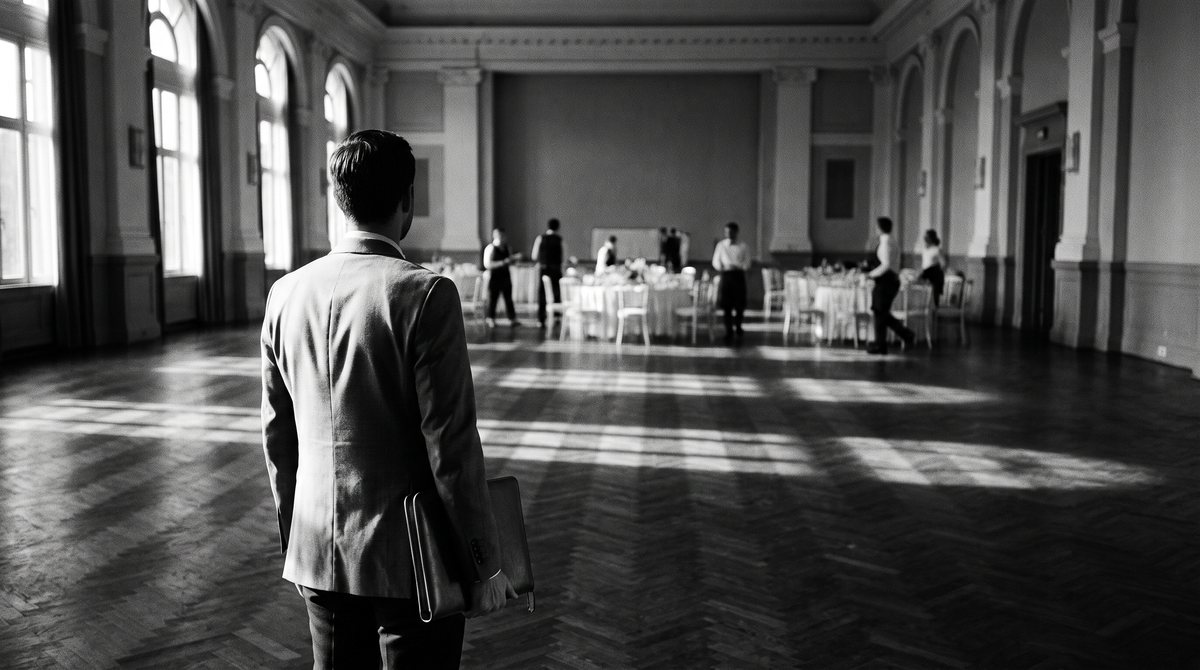
A traditional top table layout seats the couple and the wedding party together in one straight row, facing the room, and it works well for up to about ten people.1 Past that count, the row runs too long for anyone at either end to hear the middle, and a layout built to put the wedding party on show starts working against itself.
Whether it is still right for your wedding comes down to three things: how big your wedding party actually is, whether everyone you would seat there wants to be seated there, and whether you would rather spend the night on display or mostly to yourselves.
What a traditional top table layout actually is
The traditional layout is a block of 6-foot or 8-foot banquet tables joined into one straight row, with the couple seated in the centre and the wedding party on either side, facing out into the room.1 The same tables can also be joined into a U-shape when a venue's room calls for it, which keeps the same seating order but wraps it around the dance floor instead of running it straight.1
Easy Weddings' 2026 survey puts the typical Australian wedding party at 8 or 10 people, including the couple.2 That is the number a traditional top table has to seat, and it sits right at the edge of where the layout still works as one table.
Where the traditional layout starts to break
Say the wedding party is twelve once partners are counted in, both sets of parents have remarried, and two bridesmaids would rather sit with their own dates than be lined up facing three hundred people. None of that is unusual, and it is the traditional layout's actual failure mode: it was built for a smaller, more clearly defined wedding party than a lot of real guest lists now have.
The row itself breaks first. Past about ten seats, the two ends of a straight top table sit too far apart to talk across, so part of the table is effectively seated with strangers at their own wedding.1 The harder question follows once the row is full: there is nowhere obvious to put a wedding party member's partner, or a parent who was never going to sit next to an ex.
Three ways to adapt it
A combination table keeps a small sweetheart table for just the two of you and seats the wedding party at a table of their own nearby, so nobody in the wedding party has to leave a partner behind.1 Family style drops the dedicated head table altogether and seats the wedding party across the front few guest tables instead, close to the couple without being set apart from everyone else. No head table goes further again: the couple sits at a guest table of their choosing, and the whole idea of a table built to be looked at goes with it.
Build any of these three in the seat planner: set the top table's shape first, whether that is the traditional straight row or one of its replacements, then place the rest of the room around it. Moving a name between tables updates the whole layout at once, which matters most once the final numbers land in the last two weeks.
Frequently asked questions
What is a traditional top table layout? A single straight row of joined banquet tables seating the couple and the wedding party together, facing the room.1
How many people fit at a traditional top table? Comfortably up to about ten, including the couple.1 Past that, the row runs too long to work as one table.
Do parents sit at a traditional top table? Some do, and some sit at a separate table close by instead. Decide this before counting seats, since it changes the total either way.
What is the alternative to a traditional top table? A combination table, family-style seating across the front guest tables, or no dedicated head table at all. All three keep the wedding party close to the couple without forcing everyone into one row.
Does the wedding party have to sit together? No. That is what a combination table or family-style seating solves: the wedding party stays near the couple without being lined up as a group.
Who a traditional top table layout is not for
Skip the traditional layout if the wedding party is bigger than about ten once partners are counted, if any part of that group would rather not be seated on show, or if a blended or remarried family means there is no way to line everyone up without starting an argument. Build the room around a combination table or family-style seating instead, in the seat planner, and let the top table plan guide the numbers once a shape is picked.