Wedding Weekend Itinerary Template: A Day-by-Day Structure
A wedding weekend itinerary template covers the welcome night, the wedding day and the morning after as one shared schedule, not three separate plans.
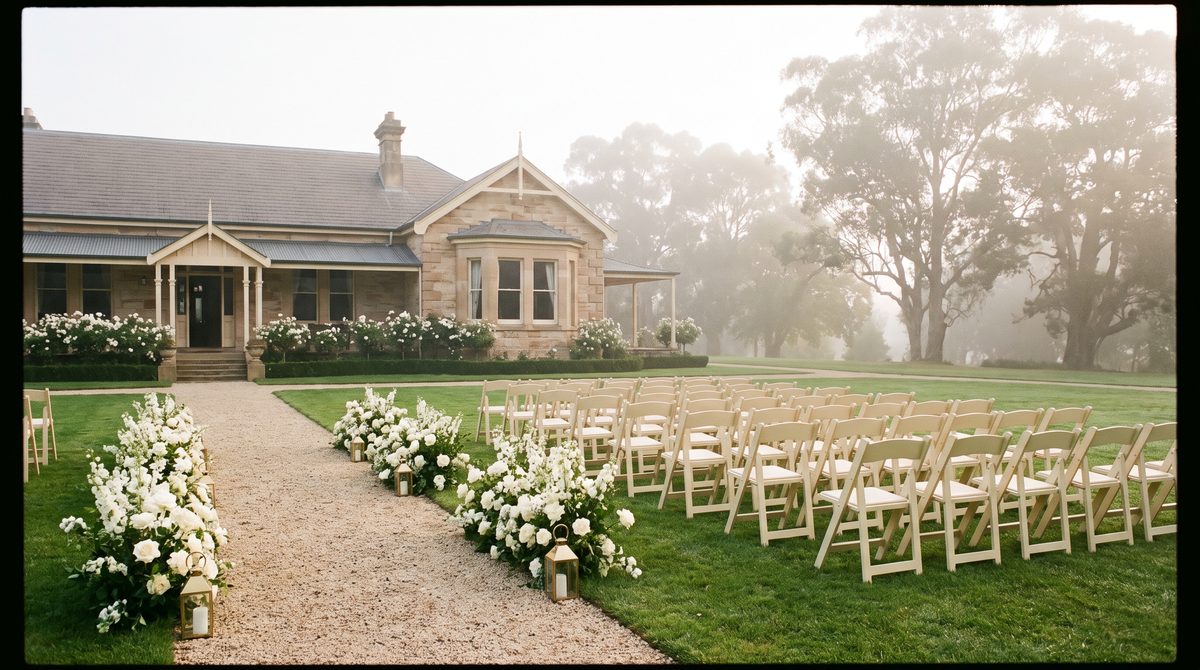
A wedding weekend itinerary template covers three days, not one: the welcome night on Friday, the wedding day on Saturday, and the morning after on Sunday. Guests fly in Friday afternoon, the ceremony is Saturday, and by Sunday brunch half the wedding party is asking what time they need to be out of the venue. In the US, Zola's 2026 First Look Report found 18% of couples planned a two-to-three-day wedding weekend, and 37% hosted at least one event beyond the wedding day itself.1 One shared document, one timeline, three days.
What does a full wedding weekend itinerary template cover?
Three blocks, not three unrelated documents: the welcome night, the wedding day itself, and the morning after. Each block answers a different question for a different audience.
| Day | Typical window | Who needs it |
|---|---|---|
| Friday | Evening, 3-4 hours | Wedding party, immediate family, out-of-town guests |
| Saturday | Full day | Every guest, every vendor |
| Sunday | Late morning, 2-3 hours | Wedding party, family, anyone staying an extra night |
Saturday carries the most rows because it carries the most people. Friday and Sunday are shorter, but they still need a start time, an end time, and someone who knows both.
What goes into Friday, the welcome night?
A welcome night has one job: get everyone in the same room before the wedding day, without exhausting anyone who still has a full Saturday ahead of them. The structure that holds up is short and front-loaded - guests arrive, drinks open the night, dinner runs long enough to matter and closes with enough runway that nobody is still out at midnight before a morning ceremony.
The Australian coordinator behind the Managing Matrimony runsheet guide states the general rule plainly: "The biggest mistake couples make is under-padding transitions."3 It applies to Friday as much as Saturday - if welcome drinks run over, dinner starts late, and a 9:30pm close becomes an 11pm one the night before a wedding.
How does the wedding day itself get built?
Saturday is the one day in the weekend that does not need to be typed out row by row. The PlannedBy run sheet generator derives the whole day from a single input - the ceremony time - rather than a blank page someone fills in by hand.
For a 3:00pm ceremony, the classic scenario places the reception entrance at 3:45pm, dinner around 6:15pm, speeches at 6:45pm and send-off at 9:00pm - a five-hour reception from couple-introduced to send-off. Move the ceremony to 4:00pm in the generator and every one of those beats shifts with it, because the underlying template holds three full scenarios - a classic evening day, an early-start morning day and a split day across two venues - not one fixed script.
The run sheet template that anchors Saturday is also the document every vendor works from - the caterer's plating time, the celebrant's start time and the band's first-dance cue all sit on the same page. That is the day a stranger flying in for the weekend actually cares about, and it is the one day in the itinerary the product builds for you rather than the one you write by hand.
What does the morning after actually need?
Sunday needs less than couples plan for, and later than couples assume. A recovery brunch from roughly 9:00am to noon covers it for most weekends - enough time for the wedding party to surface, eat, and say goodbye to guests flying out that afternoon, without anyone needing to be dressed for anything.
The same buffer logic that governs Saturday's transitions applies here: build in a pack-down window at the end rather than assuming the room empties the second brunch does.3 A 45-minute buffer before checkout is the difference between a calm final morning and a scramble to find someone's overnight bag while the venue is trying to reset the room for its next booking.
Frequently asked questions
Do we need a formal itinerary if the wedding is only one day?
No. A wedding weekend itinerary earns its place once there is a second event - a welcome night, a farewell brunch, or both. For a single-day wedding, the wedding day timeline template is the right document on its own.
How much time should sit between Friday's welcome night and Saturday's ceremony?
Enough that the latest guest home from dinner still gets a full night's sleep before hair and makeup starts. A 9:00pm-9:30pm close on Friday, against a Saturday getting-ready call time of 7:00am or later, is the shape that holds up across most weekends.
Is there a legal reason the ceremony has to sit on the Saturday of a wedding weekend?
No. Australian law places no restriction on the day or time of a marriage ceremony.2 Couples put the ceremony on the Saturday because that is when the most guests can attend, not because any other day is off-limits.
Who actually needs a copy of the full weekend itinerary, versus just the Saturday run sheet?
Every guest needs Saturday. Only the people staying for more than one night - wedding party, immediate family, anyone flying in - need Friday and Sunday. Vendors working Saturday only need the run sheet, not the weekend itinerary.
What is the difference between a wedding weekend itinerary and a run sheet?
A run sheet is one day, minute by minute, built for the people executing it. A wedding weekend itinerary is the wrapper around it - Friday, Saturday and Sunday as one shared document, with the run sheet doing the detailed work for the one day that needs it.
How far in advance should the weekend itinerary go out to guests?
Two to four weeks ahead is typical for out-of-town guests who need to plan flights and accommodation around Friday's start time and Sunday's finish time, not just Saturday's ceremony time.
What to settle first
Two decisions come before anything else gets built. First, whether Friday and Sunday exist at all - not every wedding needs a full weekend, and Zola's own figures put multi-day weekends at 18% of US weddings, not a majority.1 Second, the Saturday ceremony time, because that single input is what the run sheet generator uses to build the one day in the weekend that actually needs a computed schedule rather than a guess.
What would change on your weekend if Friday night ran an hour shorter - would Saturday morning actually start earlier, or would it just move the same tiredness one day later?