Backyard Wedding Checklist: What the Venue Would Have Done
A backyard wedding checklist covers what a booked venue already handles - council sign-off, hire, catering and a weather backup, in the order that avoids a scramble.
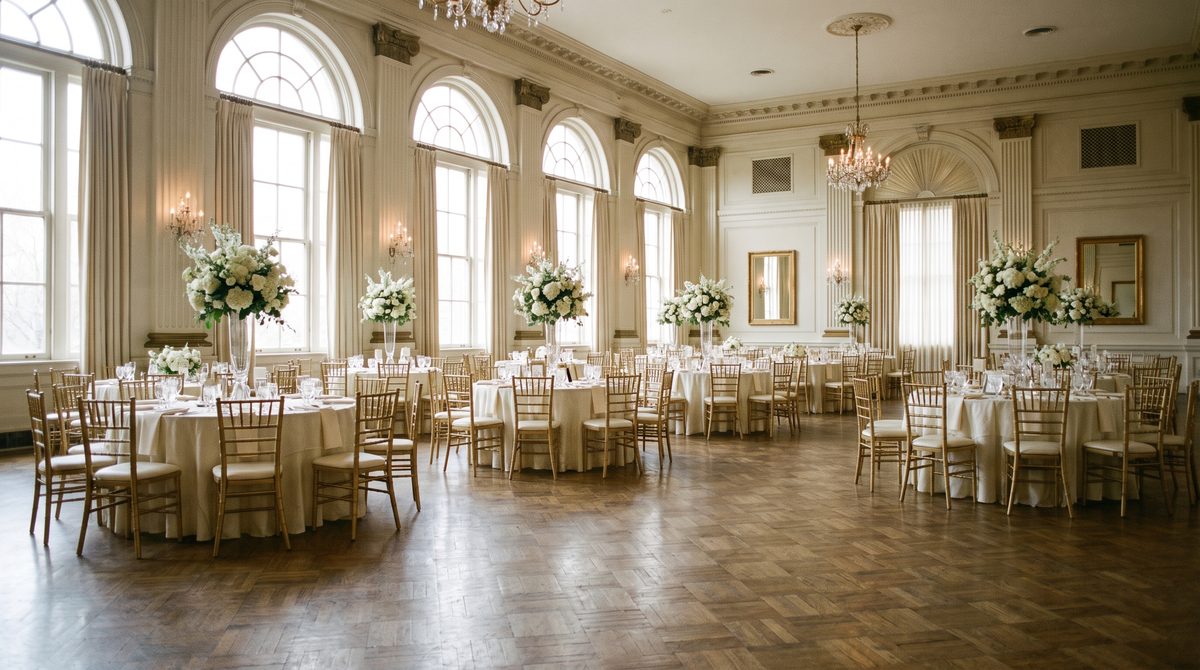
92% of Australian couples book a wedding venue.1 A backyard wedding checklist is for the other 8%, and it exists because a private garden does not hand you the things a venue quietly includes in its fee: legal sign-off to hold an event there, tables and chairs, power, a toilet count, a weather plan, and a floor plan that actually fits the guest list.
That is the whole job of a backyard wedding checklist: replace, in order, everything a venue contract would otherwise have sorted in one signature. Skip the order and the expensive mistakes are the same ones a bad venue would have avoided for you - too many guests for the space, no wet-weather plan, or a council problem discovered the week of.
The order, start to finish
Five phases cover almost every backyard wedding: measure the space against the guest list, clear it with the council and confirm the legal side, hire what a venue would have supplied, choose catering and a weather backup together, then land the week-of jobs a venue's own staff usually handle.
| Phase | Lock in |
|---|---|
| Space and guest count | Table layout, seating capacity, access and parking |
| Legal and council | Event or noise permit, celebrant, two witnesses |
| Hire | Marquee, tables and chairs, toilets, power |
| Catering and weather | Catering style, wet-weather version of the plan |
| Week of | Neighbour notice, bins, cleanup, hire return |
Space and guest count: measure the yard before the guest list grows
A national average wedding runs 85 guests.2 Almost no residential backyard seats 85 people without real thought about layout, so this is the step to do first, not the step to do once the invitations are half sent.
The maths is straightforward once it is sourced. A 2.4m trestle table seats 8 to 10, and a 1.8m trestle seats 6 to 8.6 Lined up end to end, that works out to roughly four guests per running metre of table, which turns a tape measure into a guest-count ceiling: six metres of trestle run, in a straight line with room to walk around it, seats about 24. A 1.8m round table seats 8 to 10 as well7, which is usually the better call in a yard that is wide rather than long.
PlannedBy's seat planner lays tables out against the guest list directly, so a run of trestle tables that looks fine on paper can be checked against the yard's actual shape before a marquee gets ordered, and it is on the Free plan.
Legal and council: the one thing a venue would already hold
Australian law places no restriction on the day, time or place of a wedding ceremony - a backyard is legally no different to a ballroom.8 What the law does require is an authorised celebrant physically present and at least two witnesses over 18.8 That part of a backyard wedding checklist is simple and rarely the blocker.
The council side is what a venue would have already cleared and a private address has not. Call the local council before booking anything else and ask about three things: whether a marquee over a stated size needs a permit, whether there is a noise curfew for amplified music, and whether a temporary structure needs to sit a set distance from a boundary fence. Rules vary by council, so this is a phone call to make directly, not a figure to guess at.
Hire: replacing what the venue fee used to cover
The national average spent on a wedding venue is $17,518.1 A backyard wedding checklist trades that line item for a hire list instead: marquee, tables, chairs, a generator or a power plan, and a toilet count for the guest number worked out in the step above. The national average spent on furniture and styling hire alone is $2,2033, and that figure is furniture and styling only - it does not include the marquee, so treat it as a floor for the hire budget, not a ceiling.
Catering and a weather backup, chosen together
A backyard has no venue kitchen, no in-house caterer and no indoor fallback room, so catering and weather planning are one decision, not two. The national average spend on wedding catering is $6,1774, though that figure covers everything from a fully catered sit-down to a mobile bar or a gelato cart, so it is not a clean per-guest number to divide by the headcount.
The styles that suit a backyard best are the ones that need the least fixed infrastructure: buffet service (16% of couples), food trucks (9%), finger food (8%) and grazing tables (6%).5 Alternate drop and full plated feasting, at 33% and 28% respectively5, usually need a working kitchen and a larger waitstaff than a backyard setup can support without a marquee kitchen tent added to the hire list.
The weather backup is not optional in this list, it is one of the five phases. Book the marquee regardless of the forecast, and build a wet-weather version of the run sheet at the same time as the dry one - moving a ceremony indoors an hour before it starts is a much harder call to make well without one already written.
Week of: the jobs a venue's own staff usually do
By the final week, a booked venue would be handling bin collection, a floor plan walk-through, and telling neighbouring properties what time the music starts and stops. On a backyard wedding checklist, those jobs land on the couple or the wedding party instead: confirm the hire delivery and pickup windows, tell neighbours the actual day and the cutoff time for amplified sound, and assign someone who is not in the bridal party to manage bins, parking and the marquee return.
PlannedBy's run sheet generator builds the day's schedule from one input, the ceremony time, the same way whether the ceremony is in a rented hall or a garden. DIY access is a single payment for the whole wedding, not a subscription that has to be renewed while the yard is still being set up.
Who a backyard wedding checklist is not for
Not every wedding fits this list, and it is worth saying which ones plainly rather than after a deposit is down. A guest count well above what the table maths in this checklist supports is the clearest sign - stretching a 24-seat yard to 60 guests by cutting the walking space is the layout mistake this checklist exists to prevent. A council that will not approve a marquee, amplified sound after a set hour, or a temporary structure near the boundary is a hard stop, not a negotiation. And a couple who is not willing to book a wet-weather backup at all, on the logic that it probably will not rain, is taking on the one risk a venue contract exists to remove.
Frequently asked questions about a backyard wedding checklist
Do we need council approval for a backyard wedding?
Often, yes, depending on the council and what gets set up. Call ahead about marquee permits over a certain size, noise curfews for amplified music, and boundary setbacks for temporary structures - the rules vary by council area.
How many guests can a backyard actually seat?
Work it from the table hire, not a guess. A 2.4m trestle seats 8 to 10 and a 1.8m round seats 8 to 1067, which is roughly four guests per running metre of table once the tables are laid out end to end.
Is a backyard wedding legally different from a venue wedding?
No. Australian law places no restriction on where a wedding ceremony happens, only that an authorised celebrant is present with at least two witnesses over 18.8
What does a backyard wedding checklist need that a venue checklist does not?
A hire list for everything the venue fee used to cover - marquee, tables, chairs, toilets and power - plus a council call and a wet-weather plan, since none of those are handled automatically.
Does a backyard wedding still need a day-of run sheet?
Yes. A schedule derived from one ceremony time works the same way in a garden as it does in a hired hall, and the vendors, celebrant and wedding party still all need to be in the same place at the same time.
A backyard wedding checklist is not shorter than a venue wedding's, it just moves five jobs from a contract onto the couple. Work the order above and none of those five jobs get discovered the week they were due.
Sources
- The Annual Australian Wedding Industry Report 2026 (Issue Eleven)
- The Annual Australian Wedding Industry Report 2026 (Issue Eleven)
- The Annual Australian Wedding Industry Report 2026 (Issue Eleven)
- The Annual Australian Wedding Industry Report 2026 (Issue Eleven)
- The Annual Australian Wedding Industry Report 2026 (Issue Eleven)
- Timber Trestle Table 2.4m Hire
- Round Timber Banquet Table Hire
- Marriage Act 1961 (Cth), Compilation No. 34, sections 41, 43 and 44