Planning a Wedding in 3 Months: What's Actually Possible
Planning a wedding in 3 months means every long-lead supplier already exceeds the runway - venue, photography, celebrant, music, even the cars.
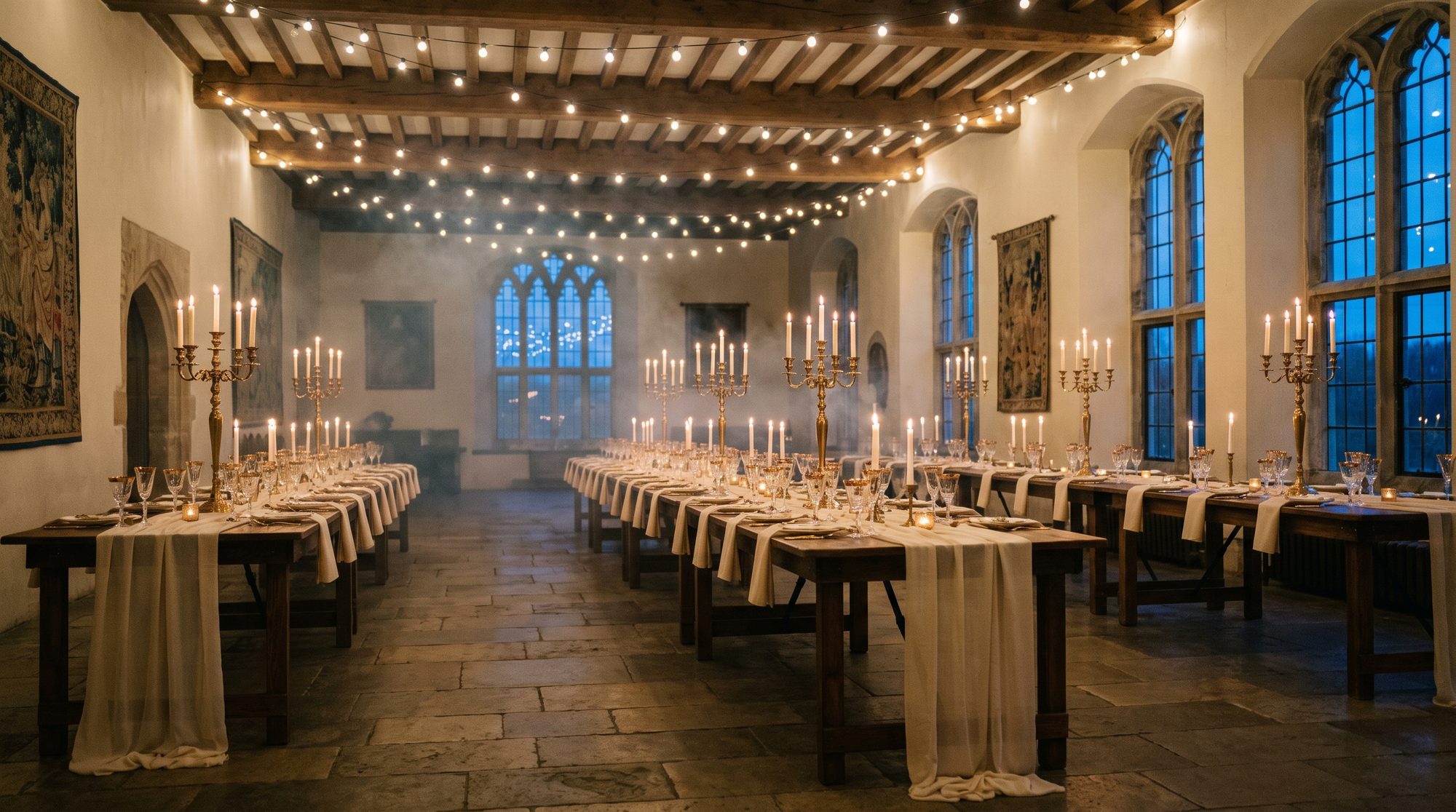
"53% of couples said they'd been ghosted by suppliers during their wedding planning," Australia's largest wedding industry survey found this year.1 Planning a wedding in 3 months can't absorb that kind of silence - every supplier category with a lead time longer than 3 months has to hear back fast, or the date moves to whoever answers first.2
Every category with a lead time over 3 months still has to be booked - venue at 11 months, the photography, celebrant, music and hair-and-makeup group at 9, wedding cars at 6.
Why 3 months breaks the normal order
Three months is about an eighth of Australia's average 24-month engagement.3 Every supplier category with the longest lead times sits outside that window before a single call gets made. Venues are booked 11 months out, photographers, celebrants, musicians and hair and makeup artists all book 9 months out, and even wedding cars, the shortest lead time in the whole report, book 6 months out.2 None of those numbers bend for a shorter date. What changes is whether the calls happen in sequence or on the same afternoon.
The legal floor is not the constraint here. A Notice of Intended Marriage has to reach the celebrant no earlier than 18 months and no later than 1 month before the wedding.4 A 3-month date clears that floor with 2 months to spare, which makes it one of the few items on this list that is genuinely not under time pressure - it just needs lodging the same week the celebrant is confirmed, so it stops sitting on the list into month two.
If the date is closer than 3 months, the last-minute wedding checklist is built for that shorter runway specifically. If it is further out, the wedding planning checklist runs by document instead of by week, which suits a longer timeline better than a week-by-week plan does.
Week one: five categories, one week
Venue, catering, planner, celebrant and photography are usually booked months apart. On a 3-month runway they land in the same week.
Australian couples book in a fairly consistent order: venue first, then catering, then a wedding planner, then the celebrant, then photography.5 Spread across an average engagement, those five decisions land months apart with room to compare. On 3 months there is no room for that, so the honest version of week one is calling all five at once and booking whoever is actually free, not whoever was the first choice.
Availability decides the order here more than preference does. A venue with an opening 3 months out did not get it because nobody else wanted the date; a photographer who can take a call this week is worth asking a direct question, not writing off. The one question worth putting to every supplier in week one is the same each time: are you free on this date, and how fast can you confirm it in writing.
What a 3-month plan can actually lock down
Where Australian couples start their wedding budget, before the average overspend.
Budget is one of the few things this timeline controls completely, because it does not wait on anyone else answering the phone. Australian couples start their wedding budget around $29,471 and the average spend ends near $38,252, about 23% higher.6 On a longer engagement that gap closes gradually, a little more added most months. On 3 months there are not enough months left for that, so the honest number belongs in week one rather than somewhere in the middle.
Guest count works the same way. Couples plan for 108 guests on average and invite 85, a cut of 23 driven mostly by budget.7 Catering, the table plan and the invitation run all wait on that number, so fixing it in week one instead of week six means writing it once instead of rewriting three documents against a deadline that has already moved.
The twelve weeks
Three checkpoints across 3 months: the core team locked by week 4, invitations out by week 8, the run sheet sent by week 12.
| Weeks | Lock this | Done when |
|---|---|---|
| 1-2 | Venue, celebrant, caterer, photographer, notice lodged | Every supplier with a lead time over 3 months has a signed booking |
| 3-4 | Wedding planner if using one, music, budget confirmed | Core team is booked and nothing longer-lead is still open |
| 5-8 | Attire, invitations designed and sent, first schedule drafted | Invitations are out with a firm RSVP date on them |
| 9-10 | RSVPs closed, final numbers, seating plan | The caterer has a headcount and the room has a table map |
| 11-12 | Run sheet finalised and sent to every supplier | Each supplier is reading their own version, not the whole document |
Weeks 1 to 4 carry the most weight on this timeline, because they hold every decision with a lead time longer than the plan itself. Once the core team is booked, the rest of the schedule runs closer to a normal countdown: design and send invitations, close RSVPs, build the table plan, finish the run sheet.
Where 3 months gets tight
Sticking to budget is the stressor Australian couples name most, at 24%, ahead of the guest list at 15%, keeping up with tasks at 10%, family at 9% and finding reliable suppliers at 8%.8 On a longer engagement, a missed task in month two still has months left to recover. On 3 months, a task that slips in week two is still missing in week ten, because there is no spare month left to absorb it.
Supplier response speed becomes part of the plan rather than a background annoyance. Nineteen percent of couples end up booking whichever supplier gets back to them first,1 which sounds like a compromise on a normal timeline and is closer to the actual strategy on a 3-month one: follow up fast, and treat a slow reply as information instead of waiting it out.
Where the checklist meets the schedule
Draft the schedule the week the venue and celebrant are booked Put a ceremony time on a run sheet in PlannedBy as soon as those two are confirmed, ahead of anything else being locked. It returns a full day computed from that one time, and every row shifts with it if the ceremony time moves later. It is on the Free plan, with no card needed.
Seating works the same way once RSVPs close: the seating chart maker drags guests onto tables in the browser and sends itself as a PDF before the tab closes. DIY access to build both is a single payment for the whole wedding, not a monthly charge, which matters more on a plan with fewer months to spread a subscription across.
Common questions
Is 3 months enough time to plan a wedding? Yes, for most Australian weddings, though without the same room to compare options that a longer engagement has. The legal floor is a single month's notice, well inside 3 months, and the categories with the longest lead times just need calling in week one instead of spreading across the year.2
What should I book first with 3 months? Venue, celebrant, caterer and photographer, called the same week rather than the same year.5 Whoever answers first and is free on the date usually decides the actual order, not the list itself.
Do I need to lodge the wedding notice immediately? No. The Notice of Intended Marriage only has to arrive between 18 months and 1 month before the wedding, so a 3-month date clears the floor with 2 months to spare.4 Lodging it the week the celebrant is confirmed just takes it off the list early.
What's realistically off the table in 3 months? Mostly the ability to compare several options in the same category before booking. Peak-season Saturdays are the hardest dates to secure this close out - 53% of Australian weddings run on a Saturday.9 A weekday or an off-peak date opens up far more of the shortlist.
Do I need a wedding planner for a 3-month timeline? Not by rule. Wedding planners are booked third in the usual order, ahead of the celebrant and photography, when couples use one at all.5 A tighter runway raises the value of having someone chase suppliers on your behalf, rather than requiring it.
What happens if a supplier doesn't respond in time? Move to the next name on the list. Fifty-three percent of couples report being ghosted by a supplier at some point during planning,1 and a 3-month timeline has no spare week to keep waiting on one that has gone quiet.
The 3-month plan against the usual lead time
| Category | Usual lead time | Where it lands on a 3-month plan |
|---|---|---|
| Venue | 11 months2 | Week 1 |
| Photographer, celebrant, musician, hair and makeup | 9 months2 | Week 1-2 |
| Wedding cars | 6 months2 | Week 2, booked as early as anything else |
| Guest list, finalised | No fixed lead time | Week 1 |
| Seating plan | After RSVPs close | Week 9-10 |
| Run sheet, distributed | The final stretch | Week 12, to every supplier by name |
None of the lead times above get shorter just because the plan is 3 months. What moves is the order they happen in: the longest ones go first, in week one, instead of spreading across a year this plan does not have.
Sources
- The Annual Australian Wedding Industry Report 2026 (Issue Eleven)
- The Annual Australian Wedding Industry Report 2026 (Issue Eleven)
- The Annual Australian Wedding Industry Report 2026 (Issue Eleven)
- Get married
- The Annual Australian Wedding Industry Report 2026 (Issue Eleven)
- How Much Does a Wedding Cost in Australia? 2026 Update
- The Annual Australian Wedding Industry Report 2026 (Issue Eleven)
- The Annual Australian Wedding Industry Report 2026 (Issue Eleven)
- The Annual Australian Wedding Industry Report 2026 (Issue Eleven)