Wedding Seating Chart Rules That Survive a Guest List
Wedding seating chart rules that hold up on the night: count the tables first, drop the default sides, and give divorced parents a table each to host.
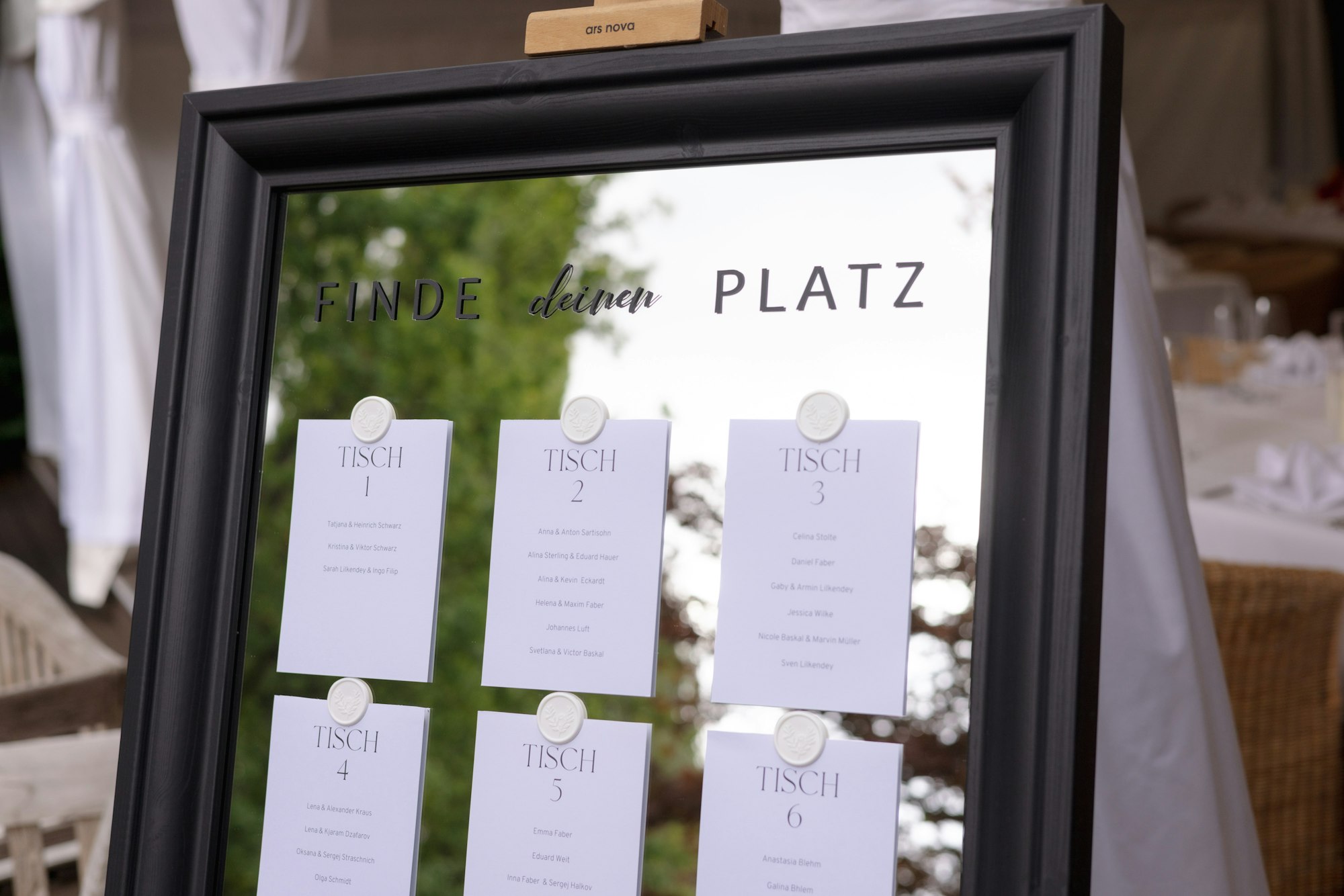
There are six wedding seating chart rules worth keeping, and the first one is arithmetic: build the chart around the tables your venue actually owns, then fit people into the seats those tables give you. Easy Weddings suggests eight guests around a standard round table, and an Australian event hire company puts a 1.8 metre round at eight to ten.12 The five rules after it are about people, and the ones that decide whether the room works are divorced parents, blended families and the guests arriving alone. Work it in this order: capacity, convention, households, names.
The seat counts an Australian hire company publishes against its own tables.
Rule 1: Count the tables before you count the guests
A seating chart is a capacity problem before it is a diplomacy problem, so ask the venue two questions early. How many tables does it own, and how many seats does it hire each one out at? Easy Weddings suggests eight guests fit comfortably around a standard round table, and notes that tables in use at weddings run anywhere from two seats to twenty.1
An Australian event hire company publishes the same numbers with the dimensions attached. A 1.8 metre diameter round banquet table seats eight to ten.2 A 2.4 metre trestle seats eight to ten, four a side and one at each end, and a 1.8 metre trestle seats six to eight.3
| Table | Seats | Layout |
|---|---|---|
| Standard round | 8 as a rule of thumb | Easy Weddings' general guidance |
| Round, 1.8m diameter | 8 to 10 | Hire company spec |
| Trestle, 2.4m long | 8 to 10 | 4 a side, 1 each end |
| Trestle, 1.8m long | 6 to 8 | 3 a side, 1 each end |
One round diameter is published there and no others, so resist building a ladder out of it. A wider round does not reliably add two more seats, and the only number worth planning against is the one your own hire company prints beside the table it is sending you.
The arithmetic then does the rest. Eighty-five guests at eight to a round comes to eleven tables; at ten to a round it comes to nine. That is division on the figures above rather than a survey finding, and those two tables are the difference between a room guests can walk through and one where they shuffle sideways past chairs all night.
Eighty-five guests, eight or ten to a round: two tables apart.
Rule 2: There is no default side of the room
Seating one partner's family on one side and the other partner's family opposite is a convention, and it is one of several in regular use. Some rooms put whoever is closest to the couple at the nearest tables, whichever family they belong to. Some mix the two families on purpose so they have met each other before the dancing starts. Some seat by household and let the families land where they land.
Pick one of those and apply it to every table in the room. A convention applied to half the room is what produces the table where four guests know each other well and the other four have never met.
Rule 3: Give divorced parents a table each to host
Each parent gets their own table, filled with their own people, and both tables sit the same distance from the couple. Seating divorced parents together to show that everyone gets along is a decision made for the photographs, and the guests at that table pay for it all evening.
Ask each parent who they would like at their table. Do not ask either of them to approve the chart as a whole, because that turns a seating question into a negotiation about rank.
A parent's new partner sits at that parent's table rather than at a table off to one side. If a table comes up short, fill it with that parent's friends before you fill it with guests who have no connection to either of them.
Two host tables, the same distance from the couple.
Rule 4: Seat blended families by household, then by age
Households arrive together, sit together and leave together, so seat them together first and sort the rest afterwards. Step-siblings sit with siblings rather than at a separate table that labels them as an addition. Where a child's parents are at different tables, the child sits with the parent they travelled with.
A children's table works when those children already know each other. It works badly when it is being used to solve an adult seating problem instead. Younger children go within sight of their own household, wherever that household is sitting.
Rule 5: Never build a table of single guests
A table assembled out of everyone who replied for one seat is visible from across the room, and the guests sitting at it can tell exactly why they were put there. Seat a guest arriving alone with the group they already know best, even if that leaves one table on nine and another on seven.
Plus-ones sit beside the person who brought them. A guest nobody at the table has met before is not a conversation project for the other seven.
Lay the tables out before you place a single name The seat planner opens without a signup, holds the number of tables your venue actually has, and lets you move guests between them while the counts stay visible.
Rule 6: Do not finalise the chart until the RSVPs stop moving
Australian couples plan for an average of 108 guests and sit down with 85, and the 2026 industry report from Easy Weddings puts that at 23 fewer guests than originally planned.4 A chart drawn against the invite list is a chart you will draw a second time.
For comparison, The Knot Worldwide's 2026 study of 10,474 US couples records a US average of 117 guests, so an American seating template starts with more tables than an Australian room usually needs.5
Book the venue, lay the tables out as soon as it is booked, and leave the names until the last reply has landed. Households can be grouped long before you know which table they end up on.
Australian couples plan for 108 guests and seat 85.
Common questions
How many guests fit at a wedding table? Eight is the working number for a standard round, and an Australian hire company puts a 1.8 metre round at eight to ten.12 Long tables scale with length: a 2.4 metre trestle takes eight to ten, a 1.8 metre trestle six to eight.3
Do we have to seat each family on its own side? No. It is one convention among several, and plenty of rooms seat by household or mix the two families deliberately. Choose one approach and use it for every table rather than for half of them.
Where do divorced parents sit? At separate tables, each hosting their own guests, both an equal distance from the couple. Placing them together to look harmonious puts the strain on everyone else at that table.
What do you do with a guest who knows nobody? Seat them with the group they have the most in common with, and tell them who they are sitting with before the day. A table built entirely out of solo guests is the one arrangement to avoid.
Should children have their own table? Only when the children already know one another. Otherwise they sit with their own household, which is also where a parent can reach them without crossing the reception.
When should the seating chart be finished? Once the RSVPs stop changing. Lay out the tables early, group the households early, and place the names last, because the guest count is the part that keeps moving.4
The one thing to do today
Call the venue and ask how many tables it owns and how many seats it hires each one out at. Write those two numbers down before you write a single name, because they decide every rule above. Then open the seat planner, lay out that many tables, and drop your households onto them. The rest of the free tools, the run sheet template and the run sheet generator run off the same wedding, for one payment rather than a monthly charge.