Celebrant Run Sheet: The Four Rows the Law Sets
A celebrant run sheet template with the four rows Australian law sets: notice 1 to 18 months out, two witnesses over 18, and three certificates signed.
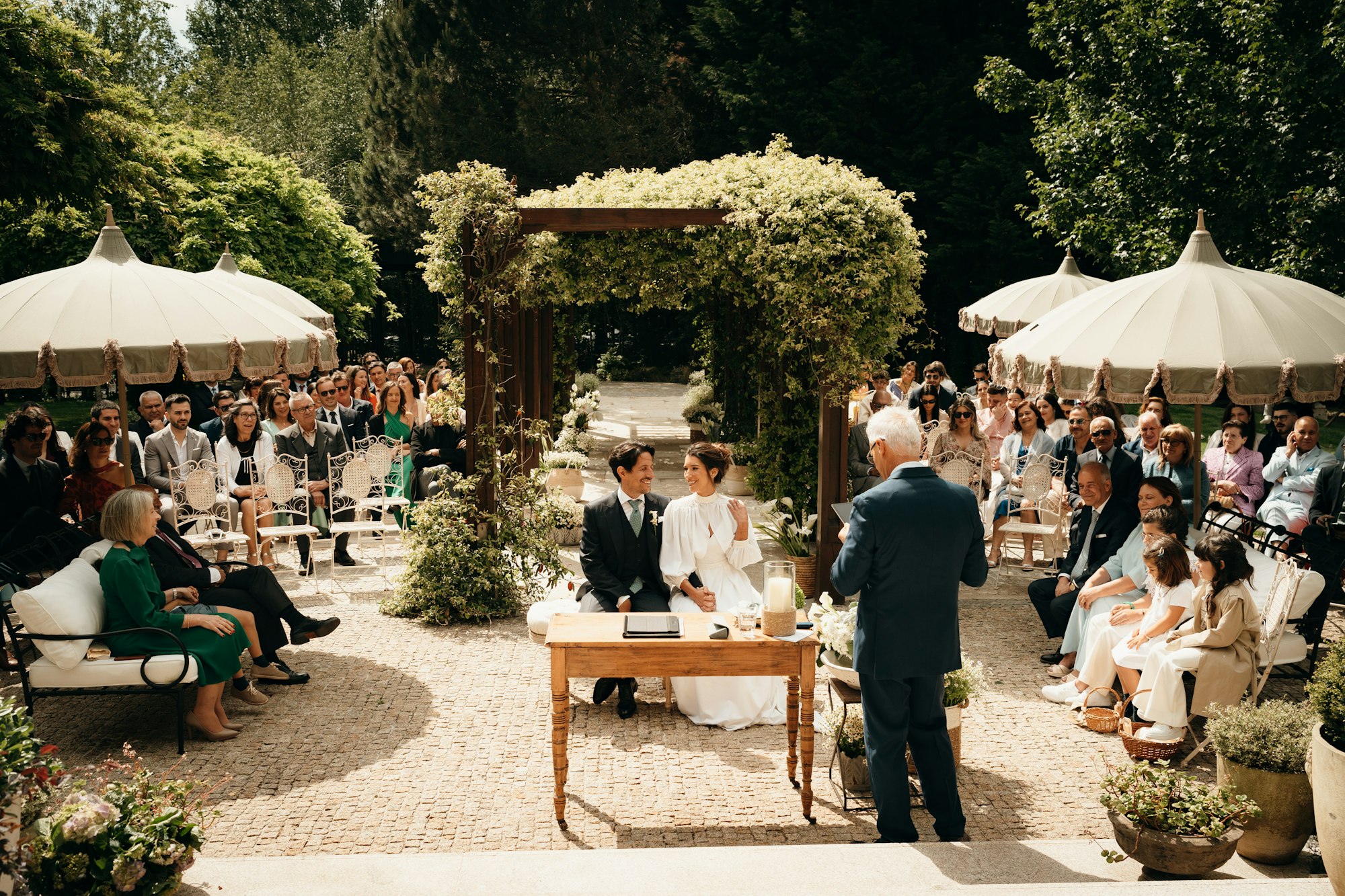
"A marriage may be solemnised on any day, at any time and at any place," says the Marriage Act. So a celebrant run sheet is the copy of the wedding day built around the four obligations the law does set: notice lodged months out, an authorised celebrant present in person, the required words said aloud, and three certificates signed in front of two witnesses over 18.1234
Copy the twelve rows below, or open a day in the run sheet generator and switch the celebrant column on.
What is on a celebrant run sheet
The shipped day is 62 rows with nine supplier columns laid over it, and the celebrant column has content in 14 of them. A supplier's copy keeps only the rows where their own column has something in it. Fourteen rows is a short document, and the shortness is the point: nobody reads a 62-row schedule on a phone, in a garden, five minutes before they have to speak.
The celebrant's copy of the shipped day: 14 rows out of 62.
Twelve rows cover a standard Australian ceremony. Four of them are set by the Marriage Act, and the rest belong to you and your venue.
| Row | When it sits | What the row has to carry |
|---|---|---|
| Notice of intended marriage received | 1 to 18 months before the day | The date it reached the celebrant |
| Ceremony time confirmed | When the venue confirms it | One time, in writing |
| Venue access for the celebrant | Off the venue contract | Who opens the space |
| Guests arrive | 30 minutes before the ceremony | The arrival music, if there is any |
| Ceremony starts | The time you typed | Nothing else booked against it |
| The monitum | Opens the ceremony | Fixed wording, three sentences |
| Readings, rings, any ritual | Inside the ceremony block | Who is doing each one |
| The words you each say | Inside the ceremony block | Fixed wording, or words to that effect |
| Two witnesses over 18 | At the signing | Two names, written down beforehand |
| Three certificates signed | At the signing | A table, a pen, four signatures |
| Signing photographs | Straight after the certificates | Your photographer's position |
| Family photos | 30 minutes after the ceremony | The groupings list |
Two of those rows place themselves once the ceremony time is typed: guests arrive 30 minutes before it, and the family photographs sit 30 minutes after it. The four legal rows are the ones this page is really about, because no other supplier on the day carries an obligation from an Act of Parliament.
The first row lands months before the day
Notice of the intended marriage has to reach the authorised celebrant not earlier than 18 months and not later than 1 month before the date of the marriage.2 The Attorney-General's Department publishes the same window in plain terms.4 A prescribed authority may allow shorter notice in prescribed circumstances, so the one-month edge is softer than the eighteen-month one.2
Write the date the notice reached the celebrant, rather than the date you sent it. They are the person who has to hold the form, and it is the only row on the whole document with a statutory deadline behind it.
The four figures the Marriage Act puts on a wedding day.
The celebrant has to be in the room
An authorised marriage celebrant must be physically present, and at least two witnesses over 18 have to be present with them.1 That makes the ceremony block the one stretch of the day where a named person cannot be swapped out at short notice.
The clock itself is free. A marriage may be solemnised on any day, at any time and at any place, so nothing about the hour you choose is a legal question.1 Light, suppliers and guests decide it instead, and what time your ceremony should start works through those three.
The words are the block nobody can trim
The celebrant speaks first. Before either of you says anything they say the monitum, three sentences set out in section 46, and then each of you says the form of words in section 45, or words to that effect.3 A minister of religion is not bound by that wording and follows the rites of their own religious body instead.3
Everything else inside the ceremony is chosen rather than required, so the length of the block is a booking question and never a legal one.
How long to block out for the ceremony
Twenty to thirty minutes for a personalised civil ceremony. Six Australian celebrants answering that question on Easy Weddings land on the same band5, and the celebrant body AMC puts a typical ceremony at 15 to 30 minutes, split by type: 10 to 15 minutes for legals only, 20 to 30 for a personalised civil ceremony, and 30 to 45 or more for something elaborate or themed.6 The NSW Registry, which performs complete legal ceremonies all day, tells couples the ceremony itself takes 10 to 20 minutes.7
Treat the registry figure as the floor, and ask your celebrant which band they have quoted for before you write a number in the block. How long a wedding ceremony takes goes further into it. Then add Jordan's padding: 30 minutes after the ceremony for photographs and travel.9
Three ceremony types, three different blocks, from the celebrant body's own banding.
Type the ceremony time and let the rows around it place themselves The run sheet generator puts guest arrival 30 minutes before the ceremony and the family photographs 30 minutes after it, so the ceremony block is the only part of that stretch you have to decide.
The signing is a row with names on it
Three marriage certificates are signed on the day, by the couple, the celebrant, and two witnesses who must be over 18.4 It is a table, a pen and four signatures, and it takes a minute unless nobody has decided who the witnesses are.
So write both names on the sheet when you write the ceremony time. A witness found in the crowd on the day turns a two-minute row into a ten-minute one while the photographer waits on the light.
Why the celebrant is handed a document
Easy Weddings' 2026 industry report puts an Australian celebrant at 18 hours of work on each wedding.8 Almost none of those hours are spent standing next to you, so the times they work to are the ones written down and sent.
Hours an Australian celebrant works on each wedding, from the 2026 industry report.
Jordan, founder and lead wedding coordinator at Managing Matrimony, sends the finished run sheet to every paid vendor with the celebrant named among them, and ships it as a PDF to print and a live link for last-minute edits.9 A printed copy goes stale the moment the venue moves the ceremony, and everyone is holding whichever version they downloaded first. On the paid side, DIY is a single payment for the wedding rather than a monthly charge. See pricing.
Common questions
Does the celebrant write the run sheet? No. They write the order of service, the running order inside the ceremony. The run sheet is the whole day around it, and the two meet at the ceremony block. Ask for the order of service with a start and a finish time on it, then place that block on the sheet.
Do the witnesses have to be named in advance? The Act asks for at least two witnesses over 18 to be present, and does not say when they are chosen.1 Naming them on the run sheet weeks out is an operational choice, and it is the cheapest one on this page.
Can we get married at 8:00 AM, or at 10:00 PM? Yes. A marriage may be solemnised on any day, at any time and at any place.1 The Australian run sheet template starts from whatever hour you pick.
How long before the wedding does the notice have to be in? Not earlier than 18 months and not later than 1 month before the date of the marriage.2 A prescribed authority may allow shorter notice in prescribed circumstances.2
Does the celebrant need the full run sheet? No, only the rows with their own column filled in, which is 14 of the 62 in the shipped day. The photographer's version is the same day filtered to a different column.
The four rows the law sets
| Obligation | What the law says | The row on the sheet |
|---|---|---|
| Notice | Not earlier than 18 months, not later than 1 month before the marriage | Date the notice reached the celebrant |
| The celebrant | An authorised celebrant must be physically present | Their arrival time, off the venue contract |
| The words | The monitum, then the set form of words from each of you | The ceremony block |
| The signing | Three certificates, two witnesses over 18 | Two witness names and a signing table |
Sources for the four rows, in order: sections 42, 41, 45 and 46, and 44 of the Marriage Act, and the Attorney-General's Department on the certificates.2134
Fill the four rows first, because they are the ones with a deadline, a named person and a fixed script attached. Everything else on the sheet is a time you get to choose, and the rest of the free tools work off the same clock as the full run sheet template.
Sources
- Marriage Act 1961 (Cth), Compilation No. 34, sections 41, 43 and 44
- Marriage Act 1961 (Cth), Compilation No. 34, section 42
- Marriage Act 1961 (Cth), Compilation No. 34, sections 45 and 46
- Get married
- How long does a civil ceremony take? | Expert Wedding Advice
- How long does a marriage ceremony usually take?
- On the day of your Registry wedding
- Easy Weddings Annual Australian Wedding Industry Report 2026
- The Ultimate Wedding Day Runsheet Template for Australian Couples