Plan a Wedding in Six Months: What Actually Compresses
A six-month wedding timeline against Australia's 24-month average engagement: what to book in week one, month by month, and where the runway runs out.
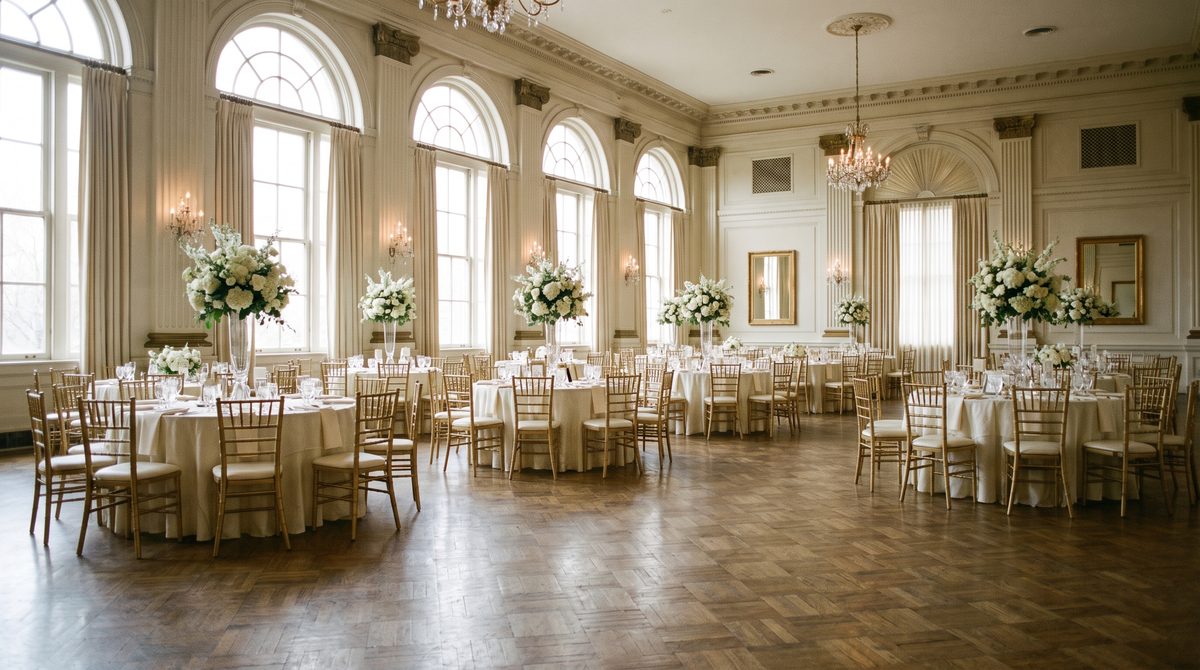
"Engagement lengths have levelled out at around 24 months," Australia's largest wedding industry survey found this year.1 Plan a wedding in six months and the runway is a quarter of that, so the order things get booked in matters more than the calendar does.
Two supplier categories run on lead times longer than six months on their own: the venue at 11 months, and photographers, celebrants, musicians and hair and makeup artists together at 9 months.2 None of that time is available here. What replaces it is booking several of them in the same week instead of the same year.
A six-month window against the usual booking lead times. Two of them start outside it.
What six months can't fit, and what to do instead
The venue's 11-month average and the 9-month average shared by photographers, celebrants, musicians and hair and makeup artists both sit outside a six-month runway before you have made a single call.2 That is not a reason to panic. It is a reason to stop treating "book the venue" and "book the celebrant" as separate months and start treating them as the same week.
If your date is more than a year out, wedding planning checklist is ordered by document instead of by month, and it is the better structure when a phase can wait for the next one to finish. Six months is short enough that the calendar is the actual constraint, so this page runs month by month instead.
The legal floor moves with you rather than against you here. The Notice of Intended Marriage has to reach your celebrant no earlier than 18 months and no later than 1 month before the wedding.7 A six-month date clears that floor by five months, so it is not the item to rush - it is the item to lodge the same week you fix the celebrant, so it stops being a thing you are still tracking in month five.
Month by month
| Month | Lock this | Done when |
|---|---|---|
| 1 | Venue, celebrant, notice lodged, starting budget | Date is fixed, notice is in, budget has a real number on it |
| 2 | Photographer, caterer, catering format | Every supplier with a lead time longer than four months has a signed booking |
| 3 | Attire, music, invitations designed | Invitations are ready to send with a firm RSVP date on them |
| 4 | Invitations sent, first schedule drafted | A ceremony time exists and a full day has been derived from it |
| 5 | RSVPs closed, seating plan, final numbers | The caterer has a headcount and the room has a table map |
| 6 | Run sheet finalised and sent to every supplier | Each supplier is reading their own version, not the whole document |
Six months, each one closing on a single deliverable rather than a date.
Months 1 and 2 are where a six-month plan differs most from a longer one. On an average 24-month engagement, the venue, the celebrant and the photographer get booked months apart, each with room to compare and reconsider.1 Six months does not have that room, so those decisions get made close together and, once made, stay made.
What to book in week one
Australian couples book in a fairly consistent order: venue first, then catering, then a wedding planner, then the celebrant, then photography.3 On a normal timeline those five are spread across the opening months. On a six-month timeline they are the opening week, because the two slowest-moving ones among them, venue and celebrant, are already running against their usual lead time.2
The first five categories couples book, in order. A six-month plan compresses all five into one week.
- Confirm the venue in writing with the access hour and the clear-out hour on it, since those two times set the ends of every day that follows.
- Lodge the Notice of Intended Marriage the same week the celebrant is confirmed. The 1-month floor means it is never the item under time pressure, but it is one less thing to carry into month five.7
- Write the starting budget as a real number, not a placeholder. Australian couples start near $29,471 and finish around $38,252, about 23% over.6 A six-month plan has less time to absorb that gap gradually, so it is cheaper to write the honest number in month one than to discover it in month five.
- Count the guest list in month one rather than waiting. Couples plan for 108 guests on average and invite 85, a cut of 23 driven mostly by budget.5 Catering numbers, the table plan and the invitation run all read off that count, so deciding it late means redoing three documents instead of one.
Where six months actually gets tight
Budget is the stressor Australian couples name most, at 24%, ahead of the guest list at 15%, keeping up with tasks at 10%, family at 9% and finding reliable suppliers at 8%.4 On a longer engagement, "keeping up with tasks" sits comfortably behind budget and the guest list because there is slack to recover a missed week. A six-month plan has none, so a task that slips in month two is still missing in month four.
What stresses couples most while planning. On a six-month runway, the third item stops being third.
The fix is one running document instead of five scattered ones - a single place holding the budget, the guest count, the supplier list and the schedule, so a missed task shows up as a gap rather than as a surprise in month five.
Draft the schedule in month four, not month six Type a ceremony time into the run sheet generator as soon as the venue and celebrant are set, well before every other detail is locked. It returns a full day computed from that one time, and if the ceremony time moves later, every row recalculates with it rather than needing to be rebuilt. No signup, and it emails itself to you as a PDF.
Seating works the same way in month five: the seating chart maker drags guests onto tables in the browser, no account, and sends itself as a PDF before the tab closes.
FAQ
Is six months enough time to plan a wedding? Yes, for most Australian weddings. The legal floor is a single month's notice, well inside six, and the only categories that genuinely run past a six-month lead time are the venue and the photography-celebrant-music-hair-and-makeup group, both of which just need to be booked in week one rather than spread out.2
What should I book first with six months? Venue, then catering, then a wedding planner if you are using one, then the celebrant, then photography - the same order most Australian couples book in, just compressed into one week instead of several months.3
Do I need to lodge the wedding notice early? Not urgently. The Notice of Intended Marriage only has to arrive between 18 months and 1 month before the wedding, so a six-month date clears the floor with room to spare.7 Lodging it the week the celebrant is confirmed just removes it from the list.
What gets cut on a six-month timeline? Usually sequence, not scope. Couples who take longer spread supplier decisions across many months and compare more options along the way; a six-month plan makes the same decisions with less time to shop around, which is a different cost to the wedding than cutting guests or suppliers outright.
Do I need a wedding planner for a six-month wedding? Not by rule. Australian couples book a wedding planner third, ahead of the celebrant and the photographer, when they use one at all.3 A shorter runway raises the value of that ordering rather than requiring it.
When should the seating chart happen? After RSVPs close, which on a six-month plan lands around month five. Building it earlier usually means building it twice, once the final numbers arrive.
The six-month plan against the usual one
| Category | Usual lead time | Where it lands on a six-month plan |
|---|---|---|
| Venue | 11 months2 | Month 1, week one |
| Photographer, celebrant, musician, hair and makeup | 9 months2 | Month 1-2, alongside the venue |
| Wedding cars | 6 months2 | Month 1, booked early rather than at the edge |
| Guest list, finalised | No fixed lead time | Month 1, so catering and the table plan read off one number |
| Seating plan | After RSVPs close | Month 5 |
| Run sheet, distributed | The final stretch | Month 6, to every supplier by name |
There is no version of this plan where everything happens with room to spare. The version that works is the one where the two slowest bookings happen first and everything else is built to fit around them, not the other way round.
Sources
- The Annual Australian Wedding Industry Report 2026 (Issue Eleven)
- The Annual Australian Wedding Industry Report 2026 (Issue Eleven)
- The Annual Australian Wedding Industry Report 2026 (Issue Eleven)
- The Annual Australian Wedding Industry Report 2026 (Issue Eleven)
- The Annual Australian Wedding Industry Report 2026 (Issue Eleven)
- How Much Does a Wedding Cost in Australia? 2026 Update
- Get married