Wedding Ceremony Seating Chart: Who Actually Needs a Seat
A wedding ceremony seating chart is mostly open seating. Only the witnesses and a handful of reserved family seats need deciding - here's who, and when.
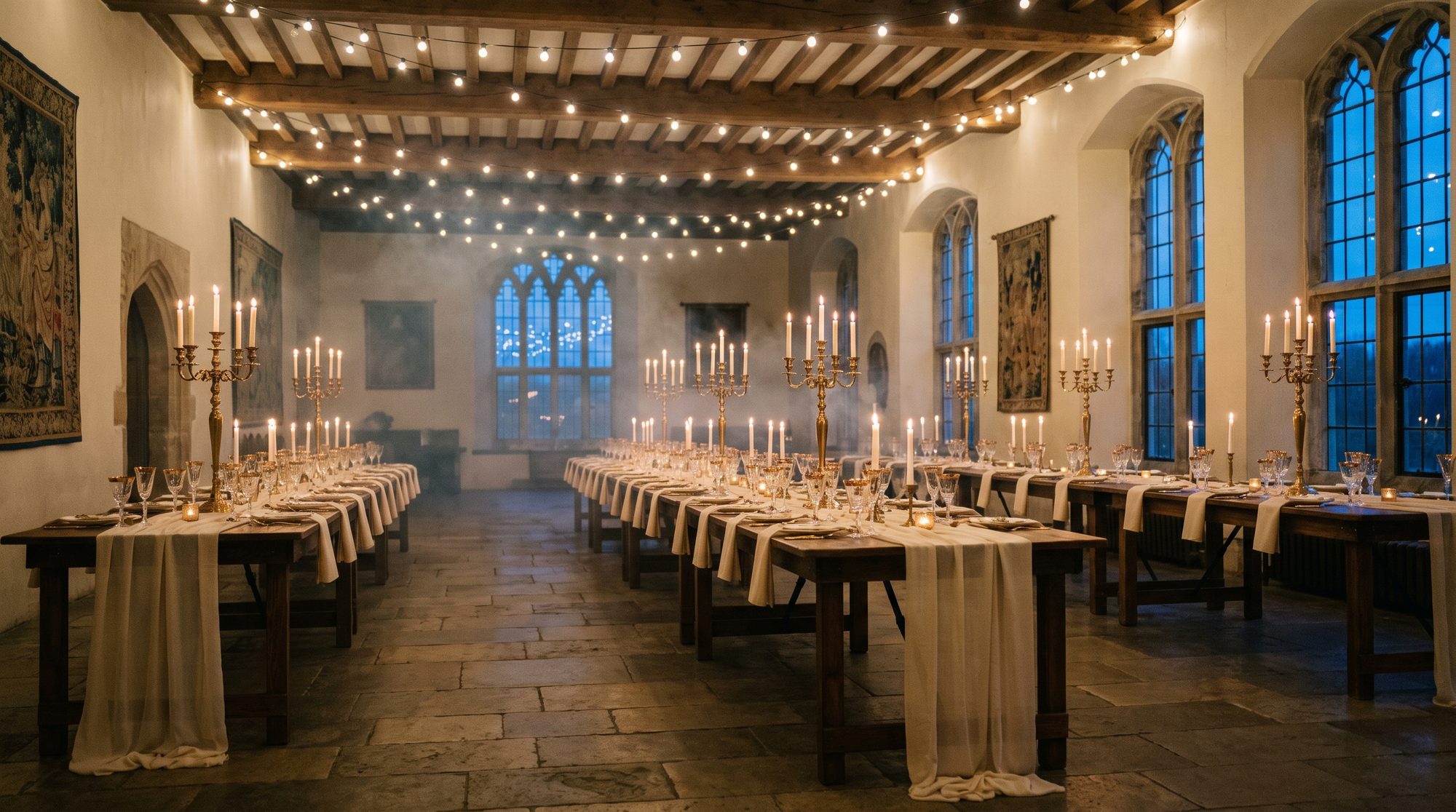
A wedding ceremony seating chart is mostly open seating. Two seats are the exception: the witnesses Australian law requires to attend.1 Everyone else, including most of the wedding party, either chooses a row or stands at the front for the ceremony itself.
Why the reception gets a chart and the ceremony doesn't
Most Australian couples allocate every reception seat. Easy Weddings' 2026 survey found "83% are having allocated seating, while 9% are letting guests choose, and 8% are having a stand-up celebration."3 Reception seating gets a full chart because the venue, the caterer and the MC all need to know who sits where before the room is set.
The ceremony has no equivalent survey figure, because for most guests there is nothing to record. Rows fill on arrival, from the back or the front depending on the venue, and nobody is assigned a specific chair. What genuinely needs deciding, and deciding before guests arrive, is who sits in the small number of seats that are reserved rather than open.
Reception seating is allocated for 83% of Australian couples. Ceremony seating reserves two.
The two seats the law actually sets
Australian marriage law sets the one seating rule that is not a preference: at least two witnesses over 18 must be physically present at the ceremony.1 They are not there for decoration. Three marriage certificates are signed on the day, and the witnesses sign alongside the couple.2
Put the witnesses in the front row, on the aisle end rather than in the middle. They need to reach the signing table without climbing past other guests, and the celebrant needs a clear line of sight to them from the front.
Two people at the front need a seat by law. The rest of the wedding party mostly stands.
What about the wedding party
Easy Weddings' 2026 report puts the typical Australian wedding party at 8 to 10 people, including the couple.4 Almost none of that group needs a reserved seat, because almost none of it sits down. The best man or best woman, the maid or matron of honour, and the rest of the wedding party stand at the front through the ceremony. A flower girl or ring bearer is the usual exception, mainly because a young child cannot stand through a ceremony that runs 15 to 30 minutes.5
Parents are the other genuine decision. Some couples seat both sets of parents in the front row, either side of the aisle; others give a parent a role in the ceremony and seat them once it is done. Settle this before the day. It is the one placement guests notice if it goes wrong.
When this needs to be settled
Two Australian wedding planners describe guests arriving around 30 minutes before a ceremony that itself runs 20 to 30 minutes.65 That is the entire window. Reserved seats need a ribbon, a sign or an usher's instruction in place before guests start arriving, because there is no time to sort it out once they do.
Guests arrive 30 minutes before a ceremony that runs 20 to 30 minutes - the window to mark reserved seats in.
Tell the celebrant, the ushers and the photographer who is sitting where before the day, not on it. A reserved seat with nobody assigned to protect it fills with the first guest who arrives early.
From reserved seats to the reception chart
Keep the ceremony's short list, witnesses, parents and anyone else reserved, in the same place as the rest of the guest list rather than on a separate note. Flag those guests as a group, and the same names carry into the seat planner when the actual seating chart, the one placing every guest at every table, gets built for the reception.
The reserved-seat group from the ceremony carries straight into the reception seat planner.
That is where a wedding ceremony seating chart and a reception seating chart genuinely differ: one is a short list to protect, the other is the seat planner working through every guest at every table. The seating chart or table plan page covers what the reception version is called depending on where you are; the alphabetical seating chart covers sorting a long guest list once that chart is built; the top table plan covers the other seat count couples get wrong, at the reception's own head table.
Frequently asked questions
Do you need a seating chart for the ceremony? Only partly. Two seats are a legal requirement: the witnesses. Everything else is a short reserved list for family, not a full chart mapping every guest to a chair.
Who has to sit in the front row? The two witnesses, on the aisle end so they can reach the signing table.1 Beyond that, front-row seats are the couple's choice, usually parents.
Does the wedding party sit down during the ceremony? Mostly not. The wedding party typically stands at the front. A flower girl or ring bearer is the common exception.4
How early do reserved seats need to be marked? Before guests start arriving, roughly 30 minutes ahead of the ceremony start.6
What is the difference between this and the reception seating chart? Scale and obligation. The reception chart places every guest at a table, and most Australian couples build one.3 The ceremony version is a short reserved list, built once and shared with whoever is directing guests to their seats.
Who actually needs a reserved seat
| Who | Seat needed | Why |
|---|---|---|
| Witnesses (2) | Yes, front row, aisle end | Legal requirement; sign the certificates after the ceremony |
| Parents | The couple's choice | Usually front row, either side of the aisle |
| Wedding party (8 to 10) | Mostly no | Standing at the front for the ceremony |
| Flower girl or ring bearer | Usually yes | Too young to stand through the ceremony |
| Everyone else | No | Open seating, any row |
Reserve those seats, tell whoever is directing guests who they're for, and put the rest of the planning effort into the seat planner for the reception, where every seat really does need a chart.
Sources
- Marriage Act 1961 (Cth), Compilation No. 34, sections 41, 43 and 44
- Get married
- The Annual Australian Wedding Industry Report 2026 (Issue Eleven)
- The Annual Australian Wedding Industry Report 2026 (Issue Eleven)
- How long does a marriage ceremony usually take?
- What actually happens at a normal Australian wedding from start to finish? | Expert Wedding Advice