Wedding Seating Card Ideas: A Decision Guide
Wedding seating card ideas start with one decision: escort cards or place cards. What goes on them, how to display them, and when to order them.
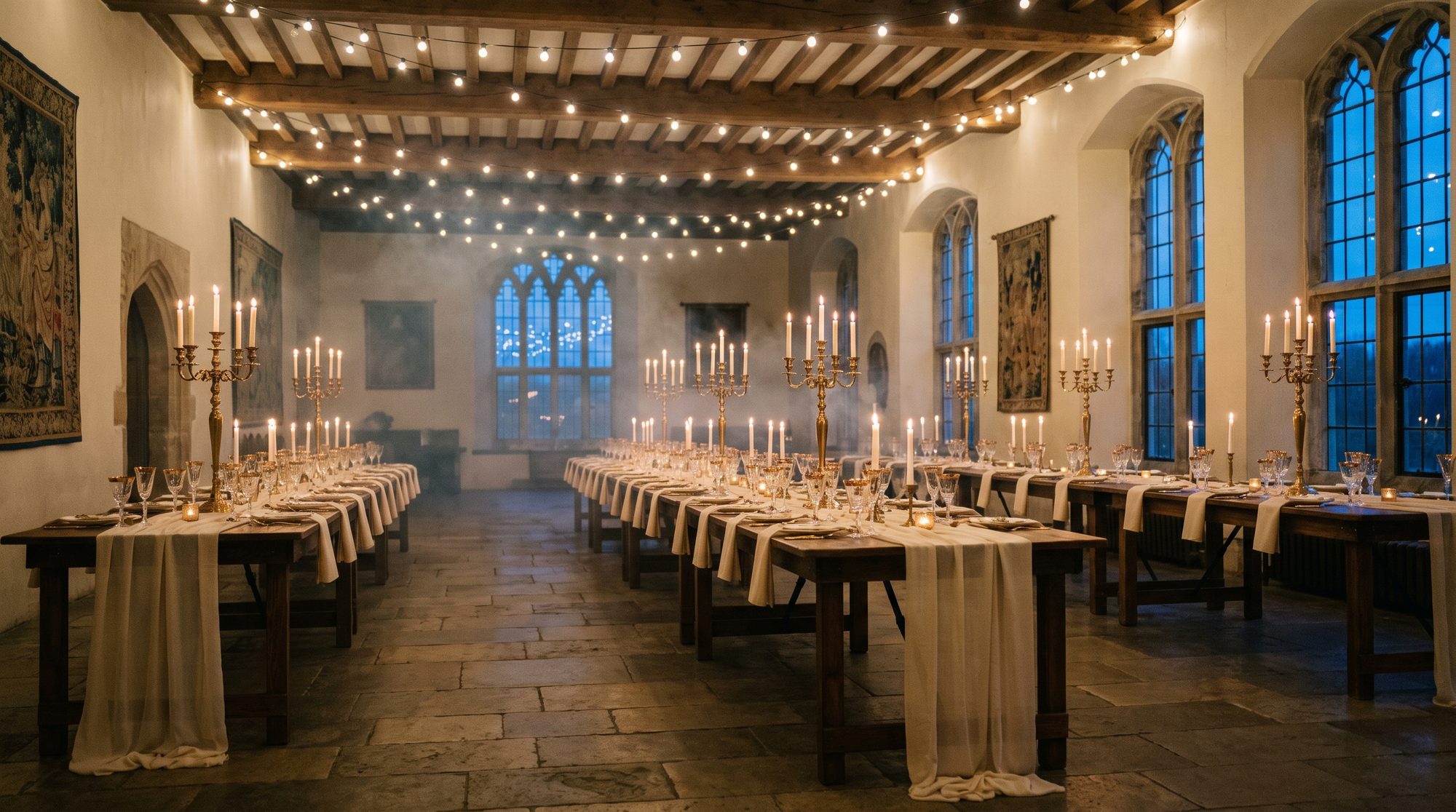
Wedding seating card ideas start with one decision before any design choice: escort cards, which tell a guest their table only, or place cards, which assign an exact seat and are sometimes just called seating cards depending on which site you're reading. Use escort cards when guests can sit anywhere within their table. Use place cards when the caterer needs to know who is sitting where before the first course goes out.
Six decisions get you from that fork to a finished set of cards. They go in the order below because each one narrows the next.
83% of Australian couples run allocated seating, which is what makes a seating card necessary in the first place.1
Step 1: Pick escort cards, place cards, or both
Escort cards sit near the entrance, one per guest or household, and name a table only. The guest carries that information to the table and picks their own chair. Place cards sit directly at the place setting and name the exact seat, decided in advance.
In Australia and the UK, the master document behind either choice is usually called the table plan; "seating chart" is the US and Canadian term for the same thing.2 The cards themselves go by escort card or place card everywhere, but a page or supplier calling the whole document a "seating chart" and one calling it a "table plan" are talking about the same object.
83% of Australian couples are running allocated seating this year, against 9% who let guests choose their own table and 8% who hold a stand-up celebration.1 That 83% needs one of the two card types. The 9% and 8% mostly don't: a table sign or a welcome board does the job without a name-by-name card at all.
The rule that decides between escort and place: if anything about the seat itself has to be fixed in advance, a specific meal, a dietary need, a family that can't sit together, use place cards. If the table is the only thing that matters and the meal is shared or identical, an escort card is enough and is faster to make.
Step 2: Decide what the meal marker needs to say
Alternate drop is the most common Australian catering style at 33%, ahead of feasting style at 28% and buffet at 16%.3 Alternate drop means the kitchen plates two or three main courses in advance and staff need to know which plate goes to which guest before anyone sits down. That is the job a marker on the card does.
Dietary requests overlap enough to matter: vegetarian requests come from 41% of guest lists, gluten-free from 32%, vegan from 22%.3 Writing "chicken" or "vegetarian, gluten-free" across a card in full gets illegible fast once two or three requirements stack on one guest.
Vegetarian, gluten-free and vegan requests each show up on a large enough share of guest lists to need a marker system, not a written-out label.3
A simple marker beats a written label: one small dot, initial, or icon per meal option, printed once on the card and keyed once on the caterer's copy. Buffet and feasting-style receptions can usually skip the marker entirely and handle dietary needs at the table instead.
The seat planner is where the guest list becomes a confirmed table-and-seat assignment. That list, not a copy pasted into a spreadsheet, is what should go to the stationer or the printer. It sits alongside the rest of the free wedding planning tools, so the guest count feeding the cards is the same one feeding the budget.
Step 3: Choose a display method
Four display formats cover most weddings: fanned across a table near the entrance, hung on a framed board, threaded on ribbon in name order, or set directly at each place setting.
Fanned and ribboned displays suit escort cards. A guest scans for their name and walks to the table; there is no seat number to get wrong. A framed board reads well at a distance and handles a large guest count better than a fanned table, which runs out of surface space past roughly 120 names. Setting cards directly at each place only works for place cards, since it commits every guest to a seat before the room opens.
54% of Australian couples style their own wedding and 20% bring in a professional stylist.4 Pinterest is the most common source of display ideas at 30%, ahead of Instagram at 16%.4 Search either for the display format, not the word "wedding" alone, or every result looks like a stock photo of a bouquet.
Step 4: Match the card to the rest of your stationery
Paper stock and lettering style are the two things that make a seating card look bolted on if they don't match the invitations. Calligraphy on a card next to a printed sans-serif invitation reads as two different weddings.
Invitations average $1,001 nationally in the 2026 Easy Weddings report.6 If a stationer is already quoting that job, ask for the seating cards in the same order. One print run on matched stock is usually cheaper, and definitely faster, than a second small job placed later once the guest list is final.
Step 5: Lock the guest list before you order
Invitations are booked 22nd of 30 in the typical Australian supplier order, and seating cards usually ride the same order, with the same stationer, once RSVPs are in.5 Ordering against the invited list instead of the confirmed list is the single most common reason a seating card order gets reprinted.
Work from the seat planner's assignment, not an earlier guest list export. If the DIY wedding seating plan process hasn't been run yet, that's the step before this one, not after it. The wedding seating plan template covers the underlying data structure if a spreadsheet is the starting point instead.
Step 6: Plan for the changes that land after printing
Order 5 to 10% of the set as blank cards. A late RSVP, a plus-one confirmed the week of the wedding, or a name spelled wrong on the original list all get handled with a blank card and a pen, not a reprint.
Keep one coordinator's copy of the full table-and-seat list on paper or a phone, separate from the display itself. On the day, a handful of guests will ask someone other than the couple where they're sitting, and the display isn't always within reach when they ask.
Frequently asked questions
What's the difference between an escort card and a place card? An escort card names a table only and lets the guest pick their own seat there. A place card names the exact seat and is decided in advance, which is what a meal marker or a specific seating requirement needs.
Do we still need seating cards if we already have a table plan on display? Yes, if seating is allocated. A displayed table plan tells a guest which table to look for; a card on the table or at the setting is what confirms it once they arrive, and it's what a caterer running alternate drop needs to identify each place.
How far in advance should wedding seating cards be ordered? Order once the guest list is confirmed, not before. Invitations sit 22nd in the typical Australian booking order and seating cards usually follow the same timeline with the same stationer.5
What should go on a wedding seating card? The guest's name as they'd want to be addressed, the table number or name, and a meal marker if the reception is running alternate drop. Dietary needs are better handled as a symbol than written out in full.
Can a small wedding skip seating cards altogether? Only if seating isn't allocated. A stand-up reception or a wedding where guests choose their own table, 17% of Australian weddings combined, can run on a single welcome sign instead.1
The next decision is the one this guide opened with: escort cards if the table is what matters, place cards if the seat is. Everything else, the marker system, the display format, the stationery match, the order timing, follows from that first answer.